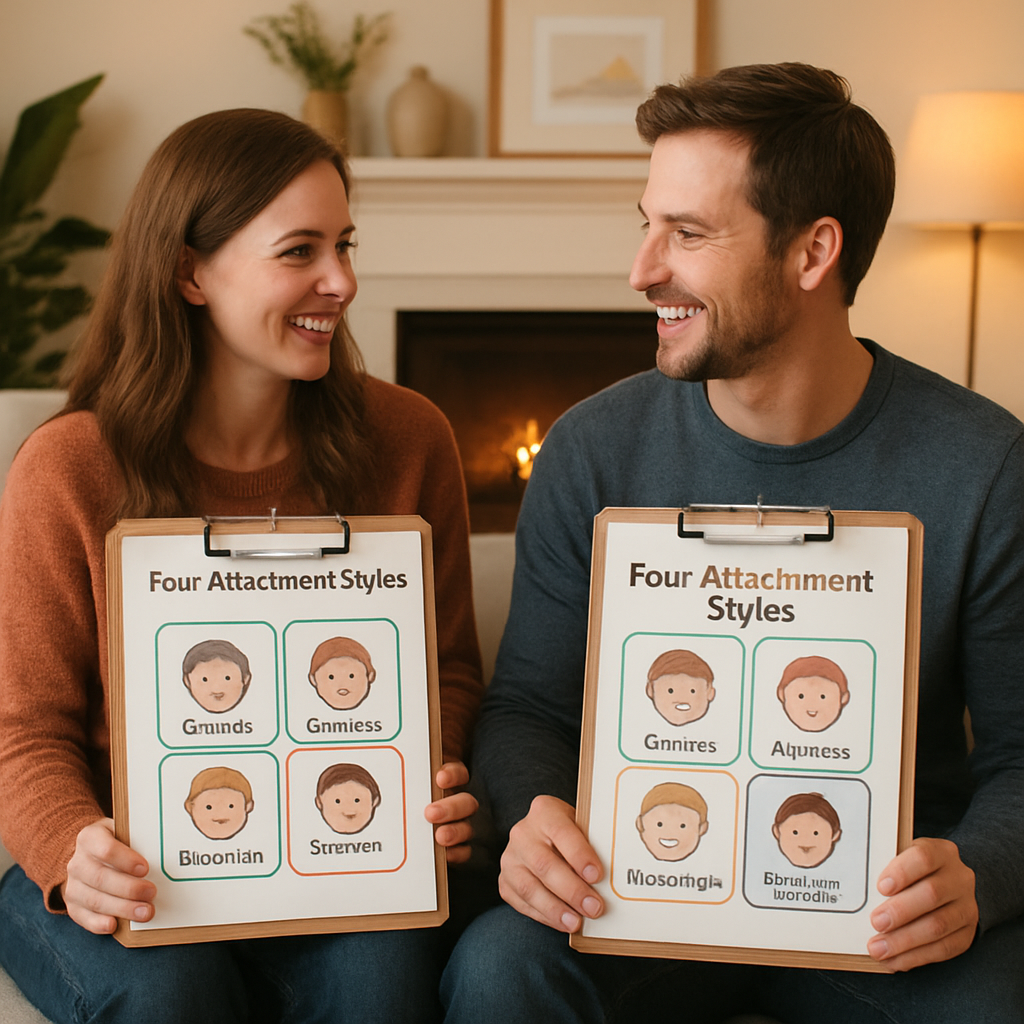
Ever felt like you and your partner are speaking different languages, even when you’re both trying your best to listen?
That uneasy feeling often isn’t about the topic at hand; it’s about the invisible script each of you is following—your attachment style. Whether you’re securely attached, anxiously yearning for reassurance, avoidantly keeping distance, or a mix of both, these patterns shape how you seek closeness, handle conflict, and interpret love.
Taking an attachment styles quiz for couples shines a light on those hidden scripts. Imagine Sarah, who grew up with a parent who was emotionally unavailable. She suddenly notices she’s quick to pull away when Alex leans in for a hug. The quiz flags her avoidant tendency, giving both of them a name for the dance they’ve been stumbling through for months.
Or consider Mark and Jenna, a newly engaged duo. Their quiz results reveal Jenna’s anxious attachment, which explains her habit of sending multiple “Are you okay?” texts after a brief silence. With that insight, they can replace frantic messages with a simple check‑in routine, turning anxiety into reassurance.
Here’s a quick three‑step way to get the most out of the quiz:
- Set aside 15‑20 minutes together, free from phones or TV.
- Answer each question honestly, discussing why a particular answer feels right or off.
- After you get your results, write down one concrete habit you’ll try this week that aligns with your style—like scheduling a weekly “feelings check‑in” for anxious partners or agreeing on a “no‑talk” buffer before heated topics for avoidant partners.
Once you’ve unpacked the results, you’ll likely notice communication gaps that need attention. That’s where practical steps for improving communication come in handy, offering tools to turn insight into everyday dialogue.
And if the conversation naturally drifts toward future plans—like moving in together or buying a first home—checking out Mortgage Mapper can give you a clear picture of the financial side, so love and logistics move forward hand in hand.
Ready to decode your love language? Grab the quiz, discuss your results, and start building the relationship you both deserve.
TL;DR
Take the attachment styles quiz for couples, uncover how your hidden attachment patterns drive everyday misunderstandings, and instantly gain clear, actionable habits to turn anxiety or distance into deeper trust.
Armed with these insights, you and your partner can start simple check‑ins, replace frantic texts with reassurance, and build a stronger, happier connection that lasts.
Step 1: Understand the Four Primary Attachment Styles
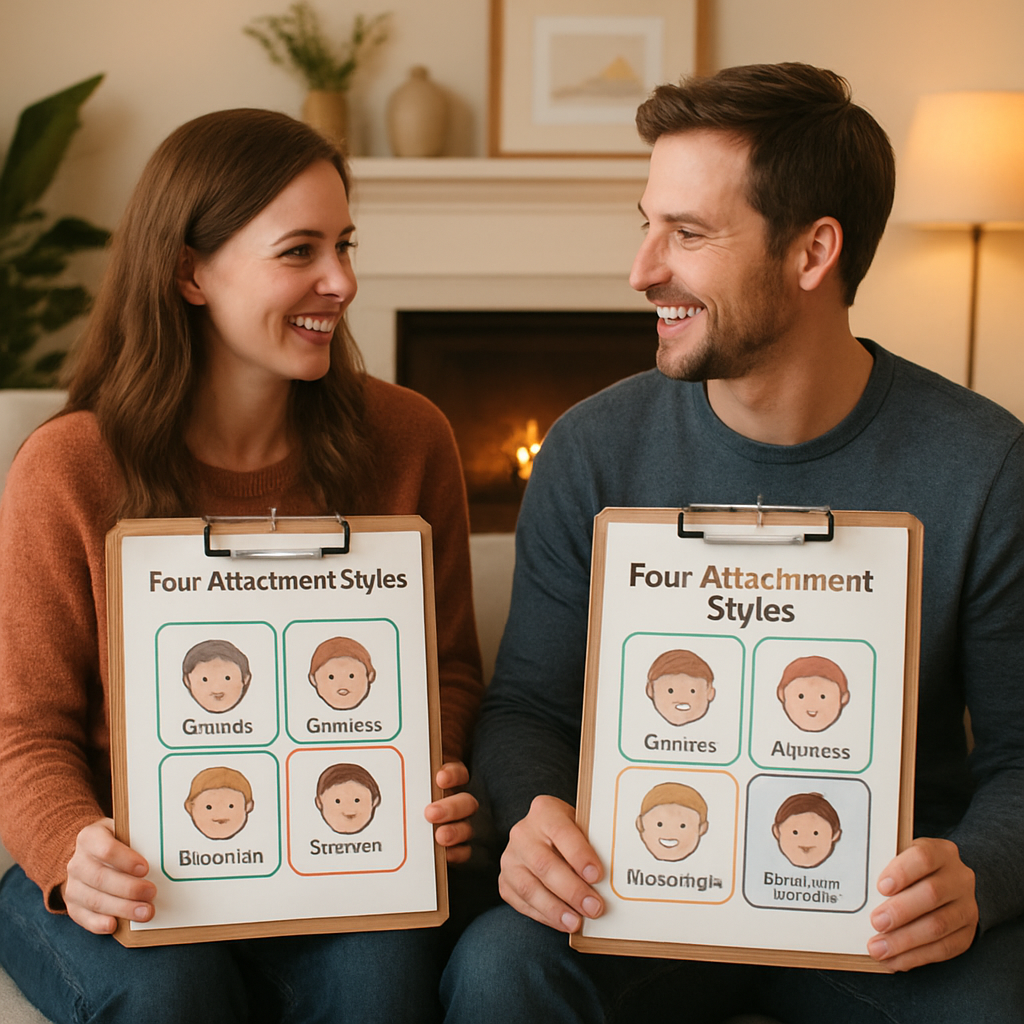
Before you even start interpreting quiz results, it helps to know what you’re looking at. The four adult attachment styles—secure, anxious, avoidant, and disorganized—are like personality “operating systems” that dictate how we seek closeness, handle conflict, and read each other’s signals.
Think about the last time you felt a wave of panic when your partner didn’t reply right away. That’s a classic anxious cue. Or remember the moment you mentally checked out during a heated discussion because you just couldn’t bear the intensity—that’s avoidant in action. By naming the pattern, the Attachment Project’s attachment styles quiz suddenly feels less like a mystery and more like a map.
Secure Attachment
Secure partners feel comfortable both giving and receiving love. They trust that their needs will be met and can bounce back from disagreements without spiraling. In the wild, this looks like a couple who can disagree about where to eat, laugh about it, and still feel safe in the relationship.
Action step: Schedule a “feel‑good check‑in” this week. Ask, “What’s one thing that made you feel loved today?” Notice how easy the conversation flows. If it feels natural, you’re likely leaning toward secure.
Anxious (Preoccupied) Attachment
Anxious folks crave reassurance and often interpret neutral moments as rejection. They might send a flurry of texts after a three‑hour silence, or they may constantly seek validation.
Real‑world example: Maya texts Alex every five minutes after he forgets to reply, then feels devastated when he finally says, “I was busy.” The pattern fuels a cycle of cling‑and‑withdraw that wears both partners down.
Action step: Create a simple “reassurance ritual.” Once a day, share one affirmation—no questions, just a quick “I love you” or “I appreciate you.” Pair this with the Relationship Check In Questions for Couples: A Practical Guide to Meaningful Conversations to keep the habit focused.
Avoidant (Dismissive) Attachment
Avoidant partners value independence above all else. They may dodge deep conversations, shut down when emotions rise, or act as if they don’t need anyone.
Example: Carlos loves his weekend solo hikes and gets defensive when Emma asks, “How are you feeling about us?” He replies, “I’m fine,” and changes the subject.
Action step: Practice “emotional pause.” When you feel the urge to shut down, count to ten, then say, “I need a moment, but I’ll come back to this.” Over time, this small habit signals to your partner that you’re willing to stay in the conversation.
Disorganized (Fearful‑Avoidant) Attachment
Disorganized individuals swing between clingy and distant, often because past trauma makes trust feel risky. Their behavior can feel like walking on eggshells.
Scenario: Sam alternates between showering Emma with affection one night and disappearing for days the next, leaving her confused and anxious.
Action step: Use a “grounding cue.” Choose a neutral word—like “anchor”—to say when you notice the swing. It reminds both partners to pause, breathe, and choose a calmer response.
These four styles don’t exist in a vacuum. Research shows that about 55% of adults fall into the secure category, while the remaining split among the three insecure styles (Mikulincer & Shaver, 2007). Understanding where you land lets you tailor the habits you build after the quiz.
Finally, remember that attachment isn’t set in stone. As the Attachment Project’s overview of the four styles explains, secure bonds can emerge when an insecure partner partners with someone who models safety and consistency. So, treat the quiz as the first step, not the final verdict.
And because a strong emotional connection often leads couples to think about long‑term security—financial as well as relational—consider checking out Understanding Life Insurance with Long Term Care Rider. It’s a practical way to protect the future you’re building together.
Step 2: Choose a Reliable Attachment Styles Quiz for Couples
Alright, you’ve got the basics of the four attachment styles down. The next move? Picking a quiz that actually tells you something useful, not just a fluffy personality test that ends with a vague "You’re awesome!".
First, ask yourself: does the quiz explain the scoring? A solid quiz will break down each question, show you which style it maps to, and give you a clear percentage for each category. If it just says "You’re mostly anxious," without the numbers, you’re probably looking at a marketing gimmick.
Second, check the source. The Attachment Project is built on decades of research, and their quiz is backed by peer‑reviewed studies. That credibility matters because you’ll be using the results to shape real habits in your relationship.
Third, consider the format. Some quizzes are multiple‑choice, others are statement‑rating (like "Strongly Agree" to "Strongly Disagree"). Rating scales give you more nuance—perfect for couples who might hover between anxious and avoidant. If you’re both busy, look for a quiz that’s under 15 minutes; you don’t want the test itself becoming a source of stress.
How to Vet a Quiz in Five Quick Steps
- Read the About Page. Reliable quizzes usually list the psychologists or researchers involved. If you see a lone blogger’s name and no citations, pause.
- Look for a Scoring Legend. You should see a table that explains what 0‑25%, 26‑50%, etc., mean for each style.
- Check for Actionable Feedback. The best quizzes end with concrete suggestions—like “Schedule a weekly feelings check‑in” or “Practice the emotional pause technique.”
- Test the User Experience. Take a sample question. Is the language clear and neutral? Jargon or leading questions (e.g., "Do you often feel abandoned?") can bias results.
- Read Reviews. Search for real couples’ testimonials. If they mention using the quiz to improve communication, that’s a good sign.
Let’s see how this plays out in real life.
Case 1: Maya and Alex tried a free quiz on a popular lifestyle blog. The quiz gave Maya a 78% anxious score but didn’t explain why. She left feeling more confused and started over‑analyzing every text from Alex. The lack of clear feedback turned a helpful tool into a source of anxiety.
Case 2: Jenna and Sam used the Attachment Project’s questionnaire. After finishing, they received a breakdown: Jenna — 62% anxious, 20% avoidant; Sam — 55% secure, 30% avoidant. The report included a “Next Steps” sheet that suggested a weekly 10‑minute “attachment check‑in” where each partner shares one fear and one gratitude. Within a month, they reported fewer arguments about texting frequency.
Notice the difference? The second quiz gave both a nuanced score and a concrete habit. That’s the sweet spot.
Choosing the Right Quiz for Your Relationship
Here’s a quick decision matrix to help you match a quiz to your needs.
| Quiz Feature | Why It Matters | How to Use It |
|---|---|---|
| Research‑backed methodology | Ensures results reflect real attachment theory, not pop‑psych buzz | Check author credentials and look for citations on the quiz page |
| Detailed score breakdown | Shows mixed styles, helping you avoid “one‑size‑fits‑all” labels | Review the percentage bars and note any style >50% |
| Actionable post‑quiz guide | Turns insight into habit; you won’t be stuck with theory | Pick a suggested habit that feels doable this week and write it down |
Once you’ve settled on a quiz, schedule a dedicated time slot. Turn it into a mini‑date: brew coffee, dim the lights, and put phones on silent. The environment matters because you’ll be answering honestly about feelings that can feel vulnerable.
After you get your results, grab a notebook and jot down one specific behavior you each want to try. For example, if the quiz flags avoidant tendencies, you might commit to a “no‑phone‑during‑dinner” rule for three nights. If anxiety pops up, schedule a “daily reassurance text” at a set time.
Need a template to keep track? Our How to Create a Weekly Relationship Meeting Template for Couples walks you through setting up a simple agenda, so you can review quiz insights every Sunday.
Finally, remember that a quiz is a conversation starter, not a verdict. If the numbers feel off, talk about why. Maybe one partner’s recent stress is skewing the results. Bring the data into a compassionate dialogue, and you’ll turn a test into a growth tool.
And if you want a broader perspective on how attachment intersects with spirituality or deeper meaning, check out Rev Dr Boudreau’s work. His writings on personal growth can complement the emotional insights you gain from the quiz.
So, pick a reliable quiz, take it together, and turn those percentages into practical steps that bring you closer every day.
Step 3: Take the Quiz Together and Interpret Results
Alright, the quiz is in front of you. Now comes the part that feels a little scary—but also exciting—because you’re about to turn numbers into a real conversation.
First, set the scene. Dim the lights, brew your favorite coffee, and put phones on silent. Treat the quiz like a mini‑date, not a test you have to ace.
When you both read each question, pause and share why a particular answer feels right—or off. If one of you leans toward “strongly agree” but the other says “disagree,” explore that tension. It’s the gold mine where attachment patterns surface.
So, what do you do when the scores pop up?
Look at the percentages for each style. If you see a 70% avoidant score for one partner and a 55% anxious score for the other, that combo often shows up as “I need space” meeting “I need reassurance.”
Instead of labeling each other, frame the insight as a shared observation: “I notice we both showed strong avoidant traits in the conflict questions.” This keeps the tone curious, not critical.
Break Down the Results Together
Grab a notebook or a shared Google Doc. Write down the top two styles for each of you. Then, for each style, list one concrete behavior that shows up in daily life. For example, “I tend to withdraw when I feel pressured” or “I send multiple texts when I’m unsure.”
Now match the behaviors. Where does one partner’s avoidance meet the other’s anxiety? That intersection is where you can plant a habit.
What’s a habit that feels doable right now?
Pick a micro‑action that addresses both sides. A simple “check‑in text at 7 pm” satisfies the anxious need for reassurance while giving the avoidant partner a predictable time to share—no surprise conversations.
If the quiz highlighted a secure base, celebrate it. Say, “We scored high on security in the trust questions—let’s keep that momentum by doing a weekly gratitude round.”
To keep the new habit on track, use a structured tool. Our Effective couples communication exercises PDF guide offers quick activities you can try right after the quiz, like the “mirror listening” drill.
Pick one exercise, set a timer for five minutes, and practice. The guide walks you through the steps, so you don’t have to reinvent the wheel.
Remember, the numbers are a conversation starter, not a verdict. If something feels off—maybe one partner just had a stressful week—note that context and revisit the quiz later.
A quick tip: schedule a “quiz debrief” session every month. Use the same notebook, update your scores, and tweak the habit. Consistency turns insight into growth.

Finally, be gentle with yourselves. It’s normal to feel a little vulnerable when you see a high anxious or avoidant percentage. Acknowledge the feeling, then ask, “What can we do together right now to feel safer?” That question keeps the focus on partnership.
Take a moment to celebrate the progress you’ve made. Even a tiny shift in how you talk about feelings is a win for your relationship.
By taking the attachment styles quiz for couples side‑by‑side and interpreting the results as a joint project, you turn abstract theory into everyday habits that bring you closer, one small step at a time.
Step 4: Apply Insights to Strengthen Your Relationship
So you’ve taken the attachment styles quiz for couples, scribbled down percentages, and had that awkward “what does this even mean?” moment. Good news: the numbers are only useful if you turn them into tiny, doable habits that fit into your everyday life.
Turn Insight into Action
First, pick the one or two patterns that showed up strongest for each of you. Maybe you both scored high on anxiety, or perhaps one of you is leaning avoidant while the other is secure. Write those labels on separate sticky notes – it makes the abstract feel concrete.
Next, ask yourself, “What’s one thing I can do right now that eases the tension this style creates?” For an anxious partner, it might be a scheduled reassurance text at 7 pm. For an avoidant partner, it could be a 5‑minute “emotion pause” before walking away from a heated convo.
Create a Mini‑Plan
Grab a notebook or a shared Google Doc and draft a mini‑plan. Use a simple table: Style | Trigger | Micro‑Habit | Check‑In Time. Fill it in together – the act of co‑authoring reinforces that you’re a team, not opponents.
Here’s a quick example:
- Style: Anxious
- Trigger: Partner doesn’t respond for >2 hours
- Micro‑Habit: Send a brief “thinking of you” text, then shift focus to a hobby
- Check‑In Time: Sunday evening, 8 pm
Keep the habit realistic. If you’re both juggling work and kids, a 10‑minute nightly check‑in beats a 30‑minute therapy‑style session.
Use a Journal Prompt to Deepen the Habit
Sometimes the hardest part is finding the words. That’s where a good prompt helps. Try something like, “What did I notice today about how my attachment style showed up, and how did I respond?” Write the answer together or separately, then share the highlights.
We’ve put together 30 couples journal prompts for communication that make this exercise painless and even fun.
Check‑In Without Judgment
Set a recurring “quiz debrief” slot – maybe the first Thursday of each month. Use the same notebook so you can see progress over time. When you review scores, focus on trends, not a single data point. If one partner had a stressful week, acknowledge that before blaming the numbers.
During the debrief, ask a simple question: “What worked this month, and what felt forced?” The answers guide you to tweak the micro‑habits. Remember, the goal isn’t perfection; it’s momentum.
Celebrate Small Wins
Did you manage to pause before walking out of a disagreement? Did you actually send that reassurance text without over‑explaining? Celebrate it! A quick high‑five, a favorite snack, or a goofy “we did it!” meme can reinforce the behavior.
Research shows that noticing and rewarding positive change strengthens neural pathways, making the new habit stick faster (Attachment Personal Development School).
When Things Slip
Slip‑ups are inevitable. If you fall back into old patterns, treat it like a data point, not a failure. Say, “I noticed I defaulted to avoidance when we talked about finances. Let’s try the pause technique next time.” This keeps the conversation solution‑focused and removes shame.
And if you ever feel stuck, revisit the quiz results. The percentages can spark fresh ideas – maybe an avoidant partner discovers a new “shared activity” habit that feels safe, or an anxious partner learns a breathing exercise to calm the nervous system.
Bottom line: the attachment styles quiz for couples is a map, not the destination. By turning the map into a daily route – one micro‑habit, one journal prompt, one check‑in at a time – you’ll find yourself traveling toward a more secure, satisfying partnership.
Conclusion
So you’ve taken the attachment styles quiz for couples, tried a few micro‑habits, and celebrated the wins. You’ve seen how a tiny pause or a scheduled reassurance text can turn a tense moment into a chance for connection.
The key is the habit loop you built: notice the trigger, choose a simple action, then check‑in later. Keep that loop alive and the nervous system learns safety, letting old scripts fade.
Remember, the quiz is a map, not a destiny. If a week feels heavy, treat it as data, not failure. Tweak the habit, talk about the feeling, and move forward together.
Set a regular “quiz debrief” night—maybe the first Thursday each month. Pull out your notes, update any scores that feel off, and pick one fresh micro‑habit to try. Keep it doable: a five‑minute check‑in or a quick gratitude swap.
Finally, give yourself credit. Every time you choose to stay present, you’re strengthening the bond you both deserve. So revisit the quiz when you need a refresher, and keep turning insight into everyday intimacy.
At Happy Together we’ve packed these steps into easy‑to‑use worksheets, so you can track progress without guessing. Pick one worksheet, set a reminder, and watch the small changes add up over weeks.
FAQ
What is an attachment styles quiz for couples and why should we take it?
Think of the quiz as a relationship mirror. It asks you and your partner to reflect on how you seek closeness, handle conflict, and react to stress. By turning vague feelings into clear labels—secure, anxious, avoidant, or disorganized—you get a shared language for the patterns that drive everyday misunderstandings. That shared language is the first step toward intentional change.
How often should we retake the attachment styles quiz for couples?
There’s no magic number, but a good rule of thumb is every three to six months, or after a major life shift (like moving in together or welcoming a baby). Re‑testing lets you see whether new habits are reshaping your patterns or if old scripts are resurfacing. Treat each result as a data point, not a verdict, and adjust your micro‑habits accordingly.
Can the quiz help us if we already think we know our attachment style?
Absolutely. Even seasoned couples can miss subtle shifts—maybe anxiety spikes during a work crunch, or avoidance surfaces when finances feel tight. The quiz forces you to answer specific scenarios you might overlook in everyday conversation. Those details often reveal blind spots, giving you fresh entry points for growth that you wouldn’t have spotted just by “feeling” your way through.
What are some simple habits to start after seeing our quiz results?
Pick one habit that matches the highest‑scoring style for each of you. An anxious partner might set a “reassurance text at 7 pm” so the need for validation becomes predictable. An avoidant partner could practice a five‑second “pause before walking away” during tense moments. Keep the habit under five minutes, write it down, and check it off daily—small consistency beats grand ambitions.
How do we turn quiz insights into a regular check‑in routine?
Start by scheduling a brief, recurring slot—maybe a Sunday evening coffee chat. Use a three‑column table: Style, Trigger, Micro‑Habit. Each partner shares one observation from the past week (e.g., “I felt a panic spike when you didn’t reply for two hours”) and how the habit helped. Celebrate any win, however tiny, and note what still feels stuck for next time.
What if one partner’s results feel inaccurate or trigger strong emotions?
First, pause and normalize the reaction. Scores are snapshots, not destiny, and stress can skew answers. Talk openly about why a particular label feels off—maybe a recent crisis colored the responses. Agree to revisit the quiz after a week of calm, or try a different reputable version. The goal is dialogue, not blame; the emotions themselves become useful data.
Is there a free worksheet to track our progress after the quiz?
Happy Together offers printable worksheets that let you log scores, habits, and weekly reflections all in one place. The layout mirrors the habit‑loop framework: notice the trigger, choose a micro‑action, then review the outcome. By filling it out together, you keep the conversation concrete and avoid vague “we should do better” talk. Download the PDF, set a reminder, and watch the tiny changes add up.