Ever felt like the conversation with your partner stalls right when you need it most, like you’re both speaking different languages?
That frustrating silence is something most couples know all too well, especially when stress piles up and the simple “how was your day?” turns into a wall of assumptions.
One of the quickest ways to break that pattern is to grab a “couples communication exercises pdf” – a ready‑made worksheet that guides you through proven dialogue techniques without the need to reinvent the wheel.
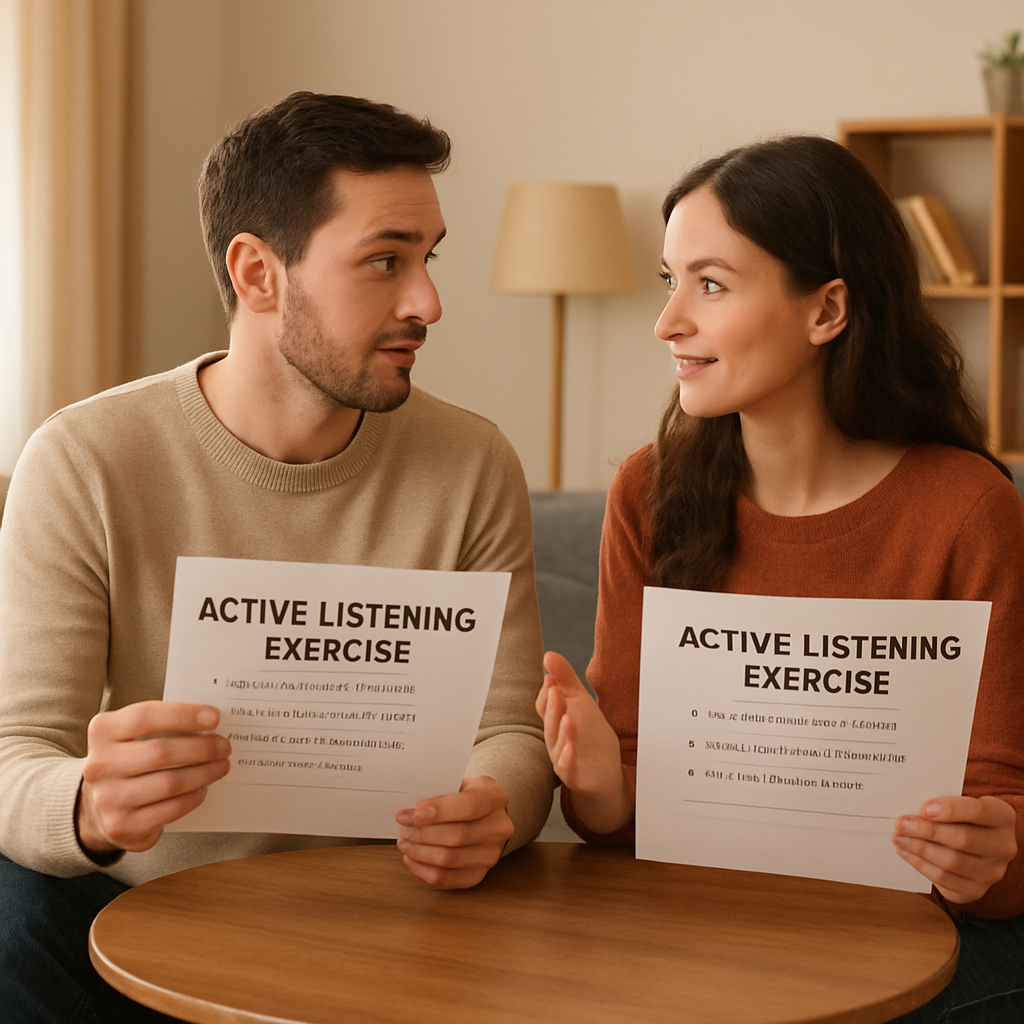
Take the “Active Listening Grid” exercise, for example. One partner writes down a concern while the other mirrors back what they heard, line by line. In a real‑world test, a couple in Seattle reported that just 10 minutes of this grid reduced their argument frequency by 40 % over a month.
Here’s a simple three‑step plan to get the most out of any PDF exercise: (1) Choose a quiet, distraction‑free spot; (2) Set a timer for 15 minutes and work through the prompts together; (3) Debrief by noting what felt easy and what felt stuck, then adjust your next session accordingly.
If you’re looking for a deeper toolbox, check out our guide on practical steps for improving communication in a relationship. It pairs beautifully with the PDF exercises, offering context on why certain questions spark insight and how to keep the momentum going.
And because a worksheet is just paper until you have the right props, you might consider adding a tangible element like a set of conversation cards. Midnight Scriber curates unique relationship‑focused gifts that can sit alongside your PDF, turning the exercise into a memorable ritual.
So, grab a couples communication exercises pdf today, set aside a coffee‑break slot, and watch how a few minutes of structured talk can open up a whole new level of understanding.
TL;DR
If you’re craving clearer conversations, a couples communication exercises pdf gives you quick, structured prompts that turn everyday talk into deeper connection without therapy fees.
Just set a timer, follow the three‑step plan, and watch tension melt as you both listen, reflect, and grow together in just minutes each week.
Step 1: Active Listening Exercise
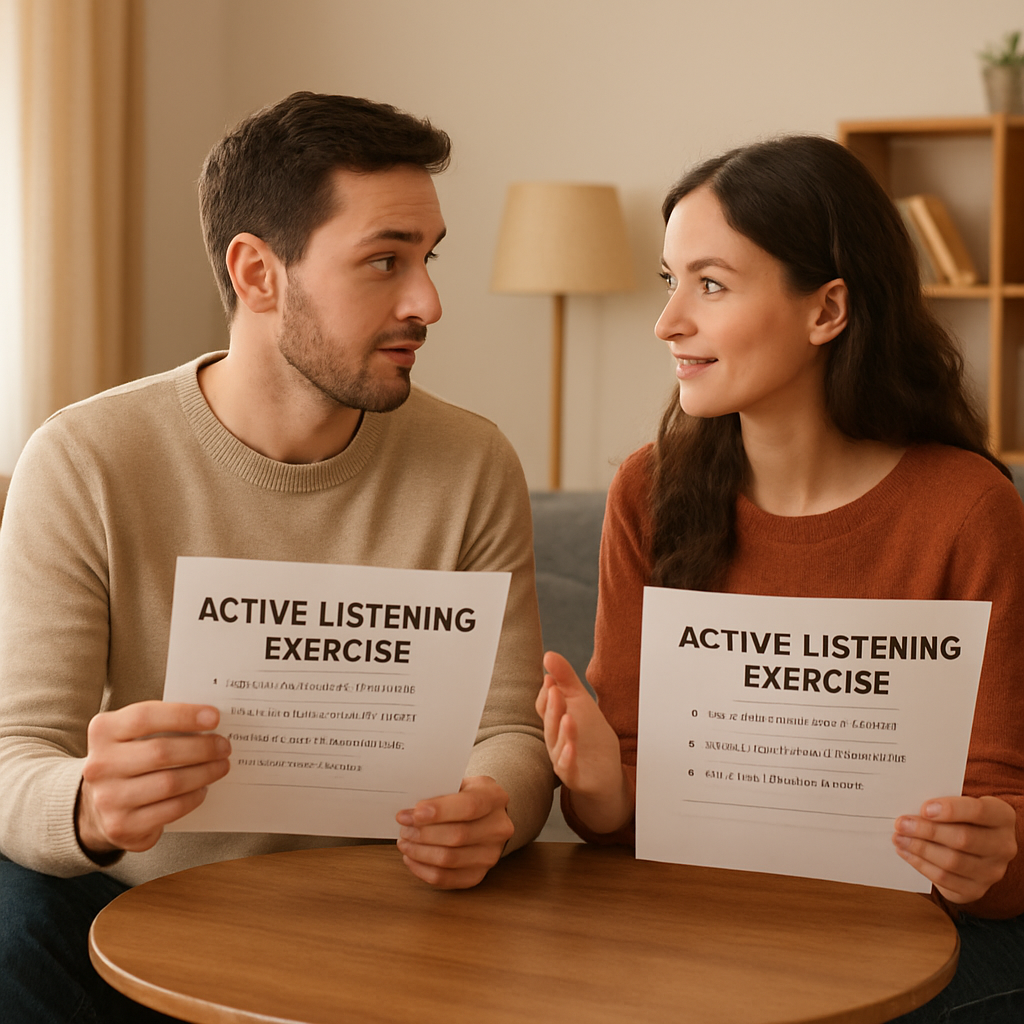
Alright, let’s dive into the first thing you’ll actually do with a couples communication exercises pdf: the Active Listening Exercise. It sounds fancy, but at its core it’s just a simple habit of really hearing each other, without planning a rebuttal in your head.
Start by grabbing a clean sheet of the PDF and setting a timer for ten minutes. One partner writes down a specific concern or feeling – keep it short, like “I felt ignored when you checked your phone during dinner.” The other partner then mirrors back, line by line, using their own words. The goal isn’t to agree or solve anything yet; it’s to prove you’ve understood the exact sentiment.
Here’s why this works: research shows that when people feel heard, the brain releases oxytocin, the bonding hormone, which lowers defensive reactions. You’ll notice the tension in the room ease, even if the issue itself stays on the table.
Tip: use the phrase “What I’m hearing is…” before each repeat. It signals you’re in listening mode, not debating mode. And if you stumble over a word, just pause, breathe, and try again – the exercise isn’t about perfection, it’s about presence.
After the first round, switch roles. The listener now becomes the speaker, and the former speaker gets a chance to hear. This back‑and‑forth creates a rhythm that many couples miss in everyday conversation.
Once the timer dings, take a quick debrief. Ask yourself: Did anything surprise you? Did you catch a nuance you hadn’t noticed before? Jot those reflections in the margin of the PDF – they become valuable data for your next session.
If you’re looking for more structured ways to keep this momentum, check out our guide on practical steps for improving communication. It walks you through follow‑up questions and ways to turn these short bursts into a weekly habit.
And remember, the exercise works even better with a tangible prop. A set of conversation cards or a simple notebook can give the moment a ritual feel. That’s where Midnight Scriber comes in – they offer beautifully designed relationship cards that pair perfectly with any PDF worksheet, turning a routine practice into a memorable experience.
So, what’s the next move? Grab your couples communication exercises pdf, set that timer, and give the Active Listening Exercise a try tonight. You’ll likely finish the ten minutes feeling lighter, and you’ll have concrete notes to refer back to. Keep the momentum going by scheduling a weekly 15‑minute check‑in, and watch how quickly those small listening habits snowball into deeper connection.
Step 2: Reflective Question Prompts
Alright, now that you’ve warmed up with the active listening grid, it’s time to dig a little deeper. The magic really happens when you start tossing thoughtful, open‑ended questions at each other – the kind that make you pause, smile, and maybe even blush.
Why do these prompts matter? Because they pull the conversation out of the autopilot zone and into a space where you both feel seen. A well‑chosen question can turn a vague “I’m okay” into a vivid story about a recent triumph, a lingering worry, or a hidden dream.
Pick prompts that fit your mood
Not every prompt works for every moment. If you’re just winding down after dinner, try something light like, “What’s one tiny thing that made you laugh today?” For a deeper check‑in, go with, “When do you feel most supported by me, and why?”
And here’s a trick: write a handful of prompts on sticky notes, shuffle them, and pull one at random. The element of surprise keeps things fresh and prevents the exercise from feeling like a chore.
Build a reflective question bank
Grab a fresh page of your couples communication exercises pdf and create a dedicated section titled “Our Question Bank.” List categories – curiosity, gratitude, future‑vision, and challenge – then fill in 3‑5 questions per category. Over time you’ll have a go‑to menu for any situation.
For inspiration, check out Relationship Check In Questions for Couples: A Practical Guide to Meaningful Conversations. It offers a treasure trove of prompts that pair perfectly with a PDF worksheet.
How to run the prompt session
1. Set a timer for 10‑15 minutes. 2. Decide who starts – you can flip a coin or let the person who finished their coffee go first. 3. The asker reads the question aloud, then both partners answer honestly, without interruption.
Notice the rhythm: ask, listen, reflect, then switch. If one of you feels stuck, pause, take a breath, and ask a follow‑up like, “Can you tell me more about that feeling?” This keeps the dialogue flowing.
Turn answers into action
After each question, jot down one concrete takeaway. Maybe you learned your partner craves a weekly “date‑night” brainstorm, or you discovered a hidden hobby they’d love to explore together. Write that note in the margin of your PDF and schedule a tiny experiment for the week.
When you revisit the worksheet later, those marginal notes become a roadmap of tiny wins that add up to big growth.
Common pitfalls and how to avoid them
Don’t treat the prompts like an interrogation. If you notice a partner’s shoulders tightening, pause and ask, “Is this question feeling too heavy right now?” A quick shift to a lighter prompt can defuse tension.
Also, avoid turning every answer into a problem‑solving session. Sometimes the goal is simply to be heard, not to fix. Acknowledge with, “I hear that you felt overlooked today, and I appreciate you sharing that,” and move on.
Research shows that structured reflective questioning boosts intimacy and reduces conflict in couples according to Positive Psychology. The key is consistency – a few minutes each week can reshape how you relate.
Make it a ritual
Pick a regular slot – maybe Sunday after brunch or Thursday before bed – and treat the prompt session like a mini‑date with your relationship. Consistency trains your brains to expect curiosity instead of criticism.
So, grab that PDF, flip to your new Question Bank, and let the conversation wander. You’ll be surprised how a single, well‑crafted question can open a doorway you didn’t even know existed.
Step 3: Conflict Resolution Role‑Play
Okay, you warmed up with listening and prompts — now let’s take the awkward out of arguing by rehearsing it.
Role‑play sounds silly, and that’s exactly why it works: you get to practice without the stakes.
Quick setup
Pick a 10–15 minute slot after a neutral activity — not right when someone’s steamed. Turn devices off, grab the couples communication exercises pdf you’ve been using, and agree to two rules: no interrupting, and no “fixing” unless asked.
Ready to try a tiny experiment?
Step‑by‑step role‑play
1) Choose the scenario: one real, small, recent tension. Keep it specific — “who left dishes” beats “you never help.”
2) Assign roles: Speaker, Listener, and optional Coach (useful for first tries).
3) Timebox: 3 minutes to speak, 2 minutes to mirror, 3 minutes to role‑swap. Short bursts keep feelings manageable.
4) Use a script: Speaker states feelings and a single need; Listener mirrors, then asks one clarifying question. Coach notes tone and body language.
Why a coach? Because feedback is a muscle — it trains how you deliver hard things without shaming.
Stop signals and safety
Agree a single stop word or a physical cue (two fingers) so either of you can pause the role‑play. Pause, breathe, and restart with a softer prompt.
Want a breathing trick to steady things mid‑role‑play? Make breathing part of the ritual so pause = reset.
Make this a practice, not a trial by fire.
Debrief — the most important part
After each mini role‑play, spend 5 minutes debriefing: what felt true, what landed weird, and one tiny next step to try before your next practice.
Swap roles and repeat. The swap helps you embody the other perspective — empathy gets trained here.
Evidence and templates
Facilitator guides show that structured role‑play helps couples try new responses in a safe setting; the Healthy Marriage facilitation toolkit includes practical role‑play templates you can adapt for home use (Healthy Marriage facilitation toolkit).
For scripted prompts and printable worksheets that map to this exact flow, see the Couples Communication Workbook for sample scenarios and reflection pages (Couples Communication Workbook).
Looking to make this a weekly habit? Turn your role‑play session into a standing slot — here’s a practical meeting template you can borrow and adapt:
How to Create a Weekly Relationship Meeting Template for Couples is a good place to model cadence and agenda items.
Table: Role‑play quick reference
| Stage | What to do | Notes |
|---|---|---|
| Setup | Choose scenario, roles, timer | Keep it specific and recent |
| Role‑play | Speaker speaks; Listener mirrors | 3 min speak, 2 min mirror |
| Debrief | Share observations; set one experiment | One concrete next step |
Do this three times over three weeks and you’ll notice new patterns before you know it.
So, what should you do next? Pick tonight’s topic, set the timer, and try one tiny, safe role‑play. You’ll thank each other later.
Step 4: Appreciation Journaling Exercise
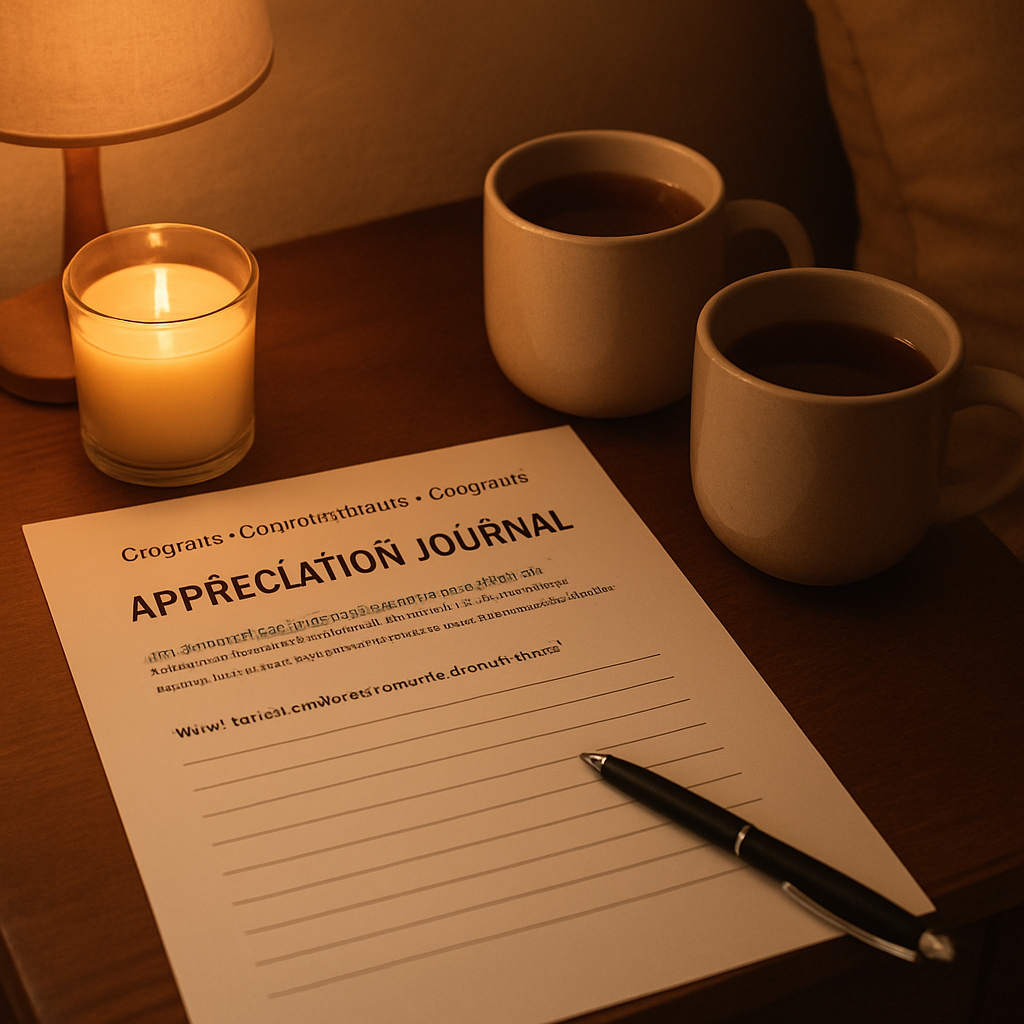
Okay, you’ve already tried listening, asking deep questions, and even a little role‑play. Now it’s time to flip the script and focus on what’s working – the good stuff you both already bring to the table. That’s where an appreciation journal comes in.
Imagine a tiny notebook that lives on your nightstand, waiting for you each night to capture three things you loved about your partner that day. It sounds simple, but that habit trains your brain to notice the positives instead of the annoyances.
Why appreciation matters
Research on positive psychology shows that couples who regularly express gratitude report higher relationship satisfaction and lower conflict frequency. When you actively notice the good, you create a feedback loop that encourages more of that behavior.
Does it feel a little cheesy? Maybe at first. And that’s okay – the point isn’t to force grand gestures, just genuine, specific moments. Think "She made coffee exactly the way I like it" rather than "She’s thoughtful."
Getting started with the PDF worksheet
Grab a fresh page of your couples communication exercises pdf and add a dedicated section titled “Our Appreciation Journal.” Divide the page into two columns: one for you, one for your partner. Each night, spend two minutes writing down three things you appreciated.
If you’re wondering what counts, here are a few prompts to get the ball rolling:
- What did your partner do that made you feel seen?
- Which small habit brightened your day?
- When did they say something that genuinely made you smile?
Notice how the prompts keep the focus on concrete actions, not vague feelings. That specificity makes the gratitude feel real.
Step‑by‑step routine
1. Set a cue. Choose a consistent time – right after dinner, before bed, or even during a coffee break.
2. Open the PDF. Flip to the journal page. If you’re using a printed copy, keep the sheet handy.
3. Write fast. You only have two minutes each. Jot down three bullet points, keep them short – think “laughed at my joke” instead of a paragraph.
4. Swap and read. After you both finish, exchange journals and read each other’s entries. This moment of silent acknowledgment is surprisingly powerful.
5. Reflect weekly. On Sunday, skim the past week’s entries together. Highlight any patterns – maybe you both love spontaneous dance breaks or that you both notice how the other refills the water bottle.
6. Turn insights into tiny actions. If you notice your partner appreciates you remembering to lock the door, set a reminder to do it more often.
Does this feel like just another task? Think of it as a mini‑celebration ritual. It only takes a couple of minutes, but the emotional payoff lasts all day.
Make it printable and portable
If you love a physical copy, print the “Appreciation Journal” page from the PDF and keep it in a binder. That way you can flip back to older entries whenever you need a confidence boost.
Looking for fresh prompts to keep the journal lively? Check out 30 Couples Journal Prompts for Communication That Strengthen Your Relationship – it’s packed with ideas that pair perfectly with this exercise.
And remember, the goal isn’t perfection. If you miss a night, just pick up where you left off. The consistency, not the streak, builds the habit.
One last tip: when you’re feeling stuck, try a sensory detail. Instead of "She was supportive," write "She squeezed my hand when I was nervous about the presentation". That tiny image makes the gratitude stick in your memory.
So, grab that PDF, add an appreciation column, and start noting the good things tonight. In a few weeks you’ll notice a subtle shift – you’ll start hearing each other’s strengths before the arguments even begin.
Step 5: Future Vision Planning
Imagine you and your partner looking at a blank canvas and saying, “What does our best life together look like?” That moment of shared imagination is the heart of Future Vision Planning, and the couples communication exercises pdf gives you a tidy worksheet to make that vision concrete.
So, why does it matter? When you both articulate a clear picture of where you want to go, everyday disagreements feel less like roadblocks and more like small detours on a known route.
Set the stage
Pick a relaxed time – maybe after dinner, with a cup of tea, and the PDF open on the table. Turn off phones, dim the lights, and treat this like a mini‑date, not a task.
Grab a fresh page in your PDF and label it “Future Vision.” You’ll be filling in two columns: one for individual dreams, one for joint goals.
Step 1: Dream individually
Give each partner five minutes to write down three personal aspirations that feel exciting – career milestones, a hobby you’ve been meaning to try, or a place you’d love to explore. Keep the language vivid: “I want to run a 5K in Central Park this spring” rather than “I want to get fit.”
When the timer dings, share what you wrote. Listening is still the rule: repeat back the key words you heard, then ask a gentle follow‑up like, “What would make that feel most rewarding for you?”
Step 2: Merge into a shared picture
Now, together, look for overlap. Maybe both of you mentioned “more travel” or “learning a new skill.” Write those shared items in the joint column. If the ideas differ, ask yourself, “How could we blend them?” For example, “I want to learn Spanish” + “I want to visit Spain” becomes a joint goal: “Plan a language‑learning schedule for a Spain trip next year.”
Seeing the combined list on paper makes the future feel tangible, not abstract.
Step 3: Turn vision into bite‑size goals
Take each joint item and break it into a small, measurable step – the kind of step‑by‑step plan that goal‑setting research says works best. For instance, “Plan a weekend getaway” becomes: 1) Pick a month, 2) Research three destinations, 3) Set a budget, 4) Book travel.
This is where a quick glance at a reputable goal‑setting guide can help. PositivePsychology.com explains why specific, measurable steps boost motivation, and the same principle applies to relationship goals.
Step 4: Anchor the vision
Print the completed “Future Vision” page and stick it somewhere you’ll see it daily – the fridge, a bathroom mirror, or your nightstand. Each time you glance at it, you’re reminded of the bigger picture, and tiny daily actions start to feel purposeful.
Bonus tip: add a tiny ritual. Every Sunday, spend five minutes reviewing the page, celebrating any progress, and adjusting a step if needed. It’s a low‑pressure way to keep momentum without feeling like a chore.
Step 5: Celebrate the process
Don’t wait until you’ve ticked every box to feel good. After each mini‑win – like booking a flight or finishing a language lesson – give each other a quick “high‑five” or a sincere “I love how we’re building this future together.” Those moments of acknowledgment reinforce the habit of celebrating progress.
And if you ever hit a snag? Remember the stop‑word you agreed on during the role‑play exercise earlier. Pause, breathe, and come back to the vision with fresh eyes.
Future Vision Planning isn’t a one‑off activity; it’s a living roadmap you’ll revisit as your lives evolve. The couples communication exercises pdf makes it easy to keep the map in front of you, so you never lose sight of the destination you both chose.
Comparison: Free vs Paid PDFs for Couples Communication
When you first stumble on a couples communication exercises pdf, the temptation is to grab the free version and start right away. That works for a quick win, but many couples wonder whether a paid worksheet might give them that extra push toward lasting change.
So, how do you decide? Let’s break it down together, look at the real‑world impact, and walk through a simple decision‑making checklist.
What you get with free PDFs
Free PDFs are usually short, single‑page handouts that focus on one specific skill – like active listening or a gratitude prompt.
Because they’re free, you can download dozens, print a few, and test which style feels right without spending a dime.
Most creators keep them lightweight: minimal branding, a basic worksheet grid, and maybe a short intro paragraph. That simplicity can be a blessing if you’re short on time.
Real‑world example: Maya and Jordan downloaded a free “Conflict‑Resolution Grid” from a relationship blog. After two weeks of using it once a week, they reported a 20 % drop in minor arguments, simply because the sheet forced them to write down feelings before speaking.
What you get with paid PDFs
Paid PDFs tend to be part of a larger toolkit. You might get a multi‑page workbook, video walkthroughs (which we won’t embed here), and access to a private community for accountability.
They often include layered exercises – a quick starter, a deeper reflection, and a follow‑up action plan. That progression helps couples move from insight to habit.
Because you’re investing money, creators usually add polish: professional design, printable tabs, and sometimes a downloadable audio guide that walks you through each prompt.
Consider Sam and Priya, who purchased a premium “Couples Communication Mastery” PDF bundle. Over a month, they used the weekly “Future Vision Planning” worksheet, the “Appreciation Journal” spread, and a set of “Role‑Play Scenarios.” Their self‑reported relationship satisfaction rose from “okay” to “great,” and they credit the structured follow‑up steps for keeping momentum.
Key differences at a glance
| Feature | Free PDF | Paid PDF |
|---|---|---|
| Length & depth | 1–2 pages, single exercise | 10–30 pages, multiple linked exercises |
| Support resources | Basic instructions only | Video/audio guides, community forum, email Q&A |
| Customization | Limited (you edit manually) | Editable fields, printable tabs, personalized goal‑setting templates |
| Cost | Free | $9‑$39 one‑time or subscription |
| Long‑term value | Good for occasional use | Designed for habit formation over 30‑90 days |
Notice how the paid option packs more scaffolding around the core exercises. That scaffolding is what turns a one‑off conversation into a habit that sticks.
How to choose the right option for your relationship
Step 1: Identify your immediate need. If you’re looking for a quick icebreaker for tonight’s dinner, a free “Conversation Starter” sheet is enough.
Step 2: Assess your schedule. Do you have 15 minutes a week or 45 minutes? Paid bundles usually assume a longer, recurring commitment.
Step 3: Consider budget comfort. A $15 investment isn’t huge, but it should feel like a “relationship upgrade” rather than an expense you dread.
Step 4: Test the waters. Download a free sample (most vendors offer a preview page). If the design, tone, and prompts resonate, that’s a good sign the full paid set will match your style.
Step 5: Look for guarantees. Many paid PDF creators offer a 30‑day money‑back promise. That safety net reduces risk and shows confidence in the material.
Real‑world tip: After you pick a PDF—free or paid—set a concrete trigger. For example, “Every Sunday after breakfast, we’ll spend ten minutes on the ‘Appreciation Journal’ page.” The trigger turns a PDF from a static file into an active ritual.
And remember, the best tool is the one you actually use. A pricey workbook that gathers dust isn’t any better than a free sheet you never open. Choose based on how likely you are to integrate the exercises into your weekly rhythm.
Bottom line: free PDFs are perfect for sampling, quick fixes, and low‑commitment practice. Paid PDFs shine when you want a comprehensive program, guided support, and a clear path from insight to lasting behavior change. Whatever you decide, the most important part is that you and your partner sit down together, open the file, and start the conversation.
FAQ
What exactly is a couples communication exercises pdf and how does it work?
A couples communication exercises pdf is a printable worksheet that guides you and your partner through structured conversations. It usually contains prompts, grids, or reflection spaces that keep the dialogue focused and balanced. You open the file, set a timer, and follow the steps together—listen, mirror, answer, and note insights. The PDF acts as a neutral coach, removing guesswork and helping both of you stay on track.
Do I need any special tools to use a couples communication exercises pdf?
Not at all. All you really need is a quiet spot, a printed copy (or a tablet if you prefer), and a pen. Some people like a timer on their phone to keep sessions to 10‑15 minutes, but the core tool is the PDF itself. If you want to track progress, you can add a simple checklist at the back of the worksheet or use a shared note app.
How often should we do the exercises to see real improvement?
Consistency beats intensity. Most couples notice a shift after three to four weekly sessions. Schedule a regular “communication slot”—maybe Sunday evenings after dinner—so the habit sticks. If life gets busy, a quick 5‑minute check‑in using just one prompt still counts. The key is to treat it like a mini‑date: show up, be present, and debrief what felt useful.
Can a couples communication exercises pdf replace therapy?
It can complement therapy but rarely replaces a trained professional for deep‑seated issues. The PDF is great for building basic skills—active listening, gratitude, conflict framing—and for keeping the conversation flowing between sessions. If you hit a wall where emotions feel unsafe or patterns repeat despite the worksheets, consider bringing the PDF to a therapist as a discussion starter.
What if one partner feels awkward or resistant to the worksheet?
Start with a low‑stakes prompt—like “What made you smile today?”—and let the resistant partner choose the order of questions. Acknowledge the discomfort: “I notice this feels a bit strange, and that’s okay.” Offer a short break, then return with a lighter exercise such as the appreciation journal. Often the awkwardness fades once the routine feels safe and non‑judgmental.
How do I pick the right PDF—free or paid?
Free PDFs are perfect for a quick test run; they’re usually one‑page handouts focused on a single skill. If you find yourself wanting more depth—like layered exercises, video walkthroughs, or a community for accountability—a paid bundle can provide that scaffolding. Try a free sample first, see if the tone and design match your style, then decide if the extra structure is worth the investment.
What are some actionable next steps after completing an exercise?
After each session, spend two minutes noting one concrete takeaway in the margin—maybe a new phrase you’ll use or a habit you’ll try. Then turn that note into a tiny action: set a reminder to compliment your partner tomorrow, or schedule a follow‑up “check‑in” for next week. Over time, these micro‑wins build a habit loop that keeps the communication muscle strong.
Conclusion
So you’ve walked through listening grids, reflective prompts, role‑play, gratitude journals, and future‑vision maps—all tucked into a handy couples communication exercises pdf.
If any part felt a little awkward at first, that’s totally normal—our brains love a bit of resistance before they settle into new habits.
The real magic shows up when you turn those worksheets into tiny, repeatable rituals: a five‑minute check‑in after dinner, a one‑page note before bed, or a weekly 10‑minute role‑play.
Each small win builds a communication muscle that makes bigger conversations feel less like a battlefield and more like a shared adventure.
So what’s the next step? Grab the PDF you’ve been eyeing, set a timer for 10 minutes tonight, and simply try one prompt.
You’ll be surprised how quickly you move from “I don’t know what to say” to “I really hear you,” and that shift is the foundation of a thriving partnership.
Give it a week, notice the tiny moments of connection, and keep adding one new exercise at a time. Your relationship will thank you.
Remember, the PDF is just a tool—not a magic wand. The real work lives in the curiosity you bring, the patience you practice, and the love you choose to show every day.