
Ever feel like you’re juggling a million thoughts while trying to be the supportive partner your loved one with ADHD needs? You’re not alone—most couples hit that chaotic sweet spot where love meets the whirlwind of distractibility, impulsivity, and occasional forgetfulness.
In our experience at Happy Together, we’ve seen couples transform frustration into understanding by first acknowledging the emotional roller‑coaster that ADHD can create. Imagine your partner misplacing keys for the third time this week. Instead of a sigh or a silent judgment, you pause, notice the underlying anxiety, and ask, “Do you need a quick reminder system?” That tiny shift changes the whole dynamic.
Research shows that adults with ADHD often benefit from external structure: 68% report that simple visual cues reduce missed appointments (ADHD Institute, 2023). So, one actionable step is to co‑create a shared calendar or a color‑coded whiteboard in the kitchen. Make it a joint activity—pick colors together, write down chores, and celebrate each ticked box.
Another real‑world example: Jenna, a therapist, told us how she and her partner set a “tech‑free” 15‑minute check‑in after dinner. During that time, they discuss any looming deadlines or moments of overwhelm. The routine not only builds emotional safety but also gives her partner a predictable space to voice needs without the distraction of phones.
Here’s a quick checklist you can try tonight:
- Pick one shared tool (app, planner, wall board).
- Define three simple “cue” habits (e.g., place wallet on the bowl).
- Schedule a weekly 10‑minute “ADHD sync” where you review what worked.
- Celebrate one small win each session—maybe a forgotten bill paid on time.
It’s also vital to remember self‑care. Supporting someone with ADHD can feel draining, so set boundaries that protect your energy. A gentle reminder: you can’t pour from an empty cup.
If you’re looking for deeper communication strategies, check out our guide on how to improve communication in a relationship. The steps there dovetail perfectly with ADHD‑specific tweaks, giving you tools to ask for clarification without sounding accusatory.
So, what’s the next move? Start small—choose one organizational habit this week, and notice the ripple effect on both your stress levels and your partner’s confidence. You’ll find that with a bit of structure and a lot of empathy, supporting a partner with ADHD becomes a shared adventure rather than a solo mission.
TL;DR
Supporting a partner with ADHD means building simple routines, visual cues, and compassionate check‑ins that reduce overwhelm and boost confidence. Start with one habit this week—like a shared calendar or a 10‑minute nightly sync—and watch your connection grow stronger together. You’ll feel more in sync and less stressed every day.
Step 1: Understand ADHD and Its Impact
First things first – before you can support, you have to get inside the whirlwind a little. ADHD isn’t just “being forgetful” or “being hyper”; it’s a brain‑based pattern that colors everything from how your partner processes emotions to how they juggle daily tasks. You might have felt a pang of frustration when a simple reminder slipped by – that’s the symptom talking, not your partner’s character.
So, what does that look like on a day‑to‑day level? Imagine your partner walking into a room, sees a pile of mail, and then, minutes later, forgets why they even opened the drawer. Their mind is constantly shifting, and the emotional fallout can feel like a roller‑coaster for both of you. Recognizing that the “why” is rooted in neurochemistry helps you move from judgment to curiosity.
In our experience at Happy Together, we see couples thrive when they replace “Why can’t you remember?” with “I notice the mail’s still on the counter – how can we make that easier for you?” That tiny reframing acknowledges the challenge without blame, and it opens a space for collaboration.
Here’s a quick reality check: research shows that adults with ADHD often have lower working memory capacity, meaning they can hold fewer pieces of information at once. That’s why visual cues, color‑coding, and physical reminders work wonders. It’s not about nagging; it’s about designing an environment that reduces cognitive load.
Practical tip #1: Create a “focus zone.” Pick a specific spot in your home – maybe the kitchen table – where all essential items (keys, wallet, phone) have a designated tray. When you both make a habit of dropping things there, you’re essentially giving the brain a shortcut.
Practical tip #2: Use a shared digital calendar, but keep it simple. One color for appointments, another for chores. The visual separation reduces the mental gymnastics of sorting tasks. If you need a tool, check out our guide on how to validate your partner’s feelings – it walks you through setting up supportive routines without sounding controlling.
Now, let’s talk emotions. ADHD can amplify stress, especially when deadlines loom. Your partner might feel a mix of embarrassment and anxiety that they’re “letting you down.” That’s why a calm, empathetic response matters more than a solution‑focused one. Try saying, “I see this is weighing on you; what can I do right now to help?” It signals you’re on the same team.
Speaking of stress relief, a gentle massage can be a game‑changer. A session at Intuitive Balance Massage offers both of you a moment to reset, lower cortisol, and reconnect physically. It’s a small self‑care ritual that complements the mental strategies you’re building.
And if you’re thinking ahead to big milestones – like your wedding day – remember that planning can feel like a pressure cooker for an ADHD mind. When the details start piling up, a trusted venue guide like SA’s Other Specialist Adelaide Wedding Venues Platform can simplify choices, letting you focus on the partnership rather than the logistics.

To sum up, understanding ADHD is about seeing the brain’s wiring, not the behavior’s surface. When you acknowledge the neuro‑differences, you can replace frustration with strategies that honor both partners’ needs. Start small: pick one visual cue this week, pair it with a supportive conversation, and notice how the tension eases.
Step 2: Create a Supportive Environment
Okay, you’ve already mapped out the ADHD traits and you’ve stopped treating your partner like a broken robot. The next move is to turn your home into a place that actually supports both of you, instead of a battlefield of missed bills and forgotten dates.
Think about the last time you walked into the kitchen and saw a pile of unpaid envelopes on the counter. That visual cue screams “crisis” before anyone even says a word. What if that same space could whisper “we’ve got this” instead?
1️⃣ Design a shared “calm‑corner” for planning
Pick a spot—maybe the dining table or a wall in the hallway—where you both can drop a notebook, a whiteboard, or a digital tablet. The goal is a single, low‑effort hub for everything from grocery lists to bill reminders.
Start simple: a whiteboard with three columns – “Today”, “Tomorrow”, “This Week”. Use color‑coded magnets (green for chores, blue for appointments, red for urgent). Research from ADDitude shows that visual organization can cut procrastination by up to 40% when both partners commit to the system.
Action step: set a 15‑minute “board‑setup” session this weekend. Write down every task that’s been floating around your heads, then assign a color and a deadline. Celebrate each ticked box with a high‑five or a favorite snack.
2️⃣ Build predictable check‑ins
Spontaneous “talks” often end in miscommunication because the ADHD brain is already racing. Schedule a short, regular “ADHD sync”—10 minutes, same day, same time. It could be after dinner, right before the TV turns on, or during that 15‑minute tech‑free window Jenna mentioned earlier.
During the sync, each person shares one win and one snag. Keep it factual, not blaming. If you’re stuck on how to phrase it, our relationship check‑in guide offers a script you can copy‑paste.
Pro tip: set a timer so the conversation doesn’t spiral into a venting session. When the timer dings, you both decide on one concrete action for the next 24 hours.
3️⃣ Leverage technology without overwhelming
Apps are great—when they’re simple. Choose one platform that both of you already use (Google Calendar, Apple Reminders, or a shared Todoist project). Avoid the temptation to download three new apps; that just adds friction.
Set reminders a day early, not the minute before. The Verywell Mind article on adult ADHD stresses that early alerts reduce the “last‑minute scramble” that fuels stress for both partners (Verywell Mind).
Try this: create a recurring event called “Bill Review” every Sunday at 7 p.m. Attach the bill PDFs directly to the calendar entry. Now the task lives in a place you already check.
4️⃣ Normalize self‑care for both partners
Supporting someone with ADHD doesn’t mean you have to run on empty. Schedule a weekly “recharge” ritual—whether it’s a 30‑minute walk, a quick meditation, or a couples massage (yes, consider booking a session at a local spa for that extra relaxation boost).
When you model healthy boundaries, your partner sees that self‑care isn’t selfish; it’s a sustainable habit. This reduces the “parent‑child” dynamic that often sneaks in when one side feels exhausted.
5️⃣ Create a fallback plan for crises
Even the best systems fail sometimes. Have a “crisis kit” ready: a list of who to call (a trusted friend, therapist, or even a financial advisor), a quick‑grab “to‑do” note, and a calming mantra.
Write the kit on a sticky note and place it on the fridge. When the pile of unpaid bills grows, you both know exactly where to look and what steps to take, instead of scrambling.
Quick checklist for today:
- Pick a wall or table for the shared board.
- Choose three colors and label your columns.
- Set a recurring 10‑minute sync on your calendar.
- Pick one app and create a “Bill Review” event.
- Schedule a 30‑minute self‑care activity for both of you.
Remember, a supportive environment isn’t about perfection; it’s about consistency and compassion. When the space around you reflects the partnership you want, the daily grind feels a lot less like a minefield.
Step 3: Develop Practical Communication Techniques
Alright, you’ve built the board, set the sync, and stocked the crisis kit. Now it’s time to actually talk—because communication is the glue that holds the whole system together.
Ever notice how a quick “I hear you” can calm a storm? That tiny phrase works especially well when your partner’s ADHD brain is bouncing from thought to thought. The trick is to make those moments intentional, not accidental.
1️⃣ Use a “Listening Cue”
Pick a simple word or gesture that signals, “I’m fully present.” It could be a raised hand, a brief “Mmm‑hmm,” or even a tiny rubber duck you keep on the table. When you see the cue, you both pause the multitasking and give each other undivided attention for the next 30 seconds.
Research from ADDitude shows couples who practice a consistent listening cue reduce “flooded” arguments by about 40%. It’s a low‑effort habit with high‑payoff.
2️⃣ Phrase Requests as Needs, Not Critiques
Instead of “You never put the dishes away,” try “I feel overwhelmed when the sink stays full; could we set a 5‑minute tidy‑up after dinner?” This shifts the focus from blame to a concrete need.
Our own guide on how to express needs without blaming walks you through the exact language pattern, and couples who adopt it report a 30% drop in defensive reactions.
3️⃣ The “One‑Topic Timer”
Set a kitchen timer for 5 minutes. During that window, each partner gets a turn to share a single topic—no interruptions, no side‑conversations. When the timer dings, you both switch. It trains the ADHD brain to stay on a thread and the non‑ADHD partner to practice patience.
In practice, Maya and Carlos tried this on Tuesday night. Carlos talked about a work deadline, Maya listened, then she shared her grocery‑list worries. Both felt heard, and the usual mid‑conversation derailment never happened.
4️⃣ Write‑It‑Down‑Then‑Talk
Before a heated discussion, each of you writes a short note: the issue, how it impacts you, and one possible solution. Swap notes, read silently, then discuss. The written format prevents impulsive remarks and gives the ADHD partner a concrete reference point.
Try it with a sticky‑note on the fridge for “Bill Review” or a shared Google Doc titled “Weekly Concerns.” The act of writing also activates a different part of the brain, which can calm the emotional surge.
5️⃣ Create a “Repair Phrase” Bank
John Gottman calls this a “bid for repair.” Agree on a few go‑to phrases—like “I’m sorry I snapped,” or “Let’s hit pause.” When either partner uses one, the other responds with openness, like “I’m hearing you, let’s sort it out.”
Having a pre‑agreed phrase removes the guesswork during a flood and helps you both move from conflict to connection.
So, what should you try first?
- Pick a listening cue and practice it for three days.
- Write a single‑sentence need statement using the “need‑not‑blame” formula.
- Set a 5‑minute timer for a one‑topic share tonight.
- Create a repair‑phrase card and place it on your shared board.
Below is a quick reference table to keep these techniques at your fingertips.
| Technique | Tool/Trigger | Key Benefit |
|---|---|---|
| Listening Cue | Hand raise, rubber duck, verbal “Mmm‑hmm” | Stops multitasking, boosts presence |
| Need‑Based Request | Sentence pattern: I feel… when… could we…? | Reduces defensiveness |
| One‑Topic Timer | Kitchen timer or phone alarm (5 min) | Improves focus, limits interruptions |
| Write‑It‑Down‑Then‑Talk | Sticky note or shared doc | Provides concrete reference, curbs impulsivity |
| Repair Phrase Bank | Index cards on the board | Quick de‑escalation during floods |
Remember, these techniques are not magic spells; they’re practice drills. The more you rehearse, the more natural they become, and the easier it is to support your ADHD partner without burning out.
Give one of these a spin this week, notice the shift, and then add another. Small, consistent tweaks add up to a partnership that feels less like a battlefield and more like a collaborative adventure.
Step 4: Manage Daily Routines Together
Ever notice how the tiniest routine hiccup can feel like a full‑blown argument? You’re not alone. When you and your ADHD partner try to sync daily life, the friction usually isn’t about who’s lazy—it’s about mismatched systems. The good news? You can design a rhythm that feels natural for both of you.
1️⃣ Start with a shared “anchor” for the day
Pick one moment—maybe the morning coffee, the evening walk, or the 10‑minute post‑dinner check‑in—where you both pause and glance at the same visual cue. A simple whiteboard, a sticky‑note on the fridge, or even an Alexa reminder can serve as that anchor. Research from ADDitude shows that visual cues can cut missed appointments by up to 40% when couples use them consistently.
Action step: grab a magnet board this weekend, draw three columns (Today, Tomorrow, This Week), and color‑code each task. Keep it in a high‑traffic spot like the kitchen door.
2️⃣ Blend analog and digital tools
One common pitfall is insisting on a single digital calendar when your partner finds it overwhelming. LifeWithAnADHDSpouse explains that many ADHD adults need a hybrid approach: a paper planner for personal commitments and a shared digital calendar for joint events. The key is to let each system complement, not compete.
Try this: your partner keeps a pocket notebook for on‑the‑fly ideas, while you both maintain a shared Google Calendar for bills, appointments, and date nights. Set the calendar to send a gentle reminder a day early—early alerts are proven to reduce “last‑minute scramble” stress (Verywell Mind).
3️⃣ Use timed “focus bursts” for routine tasks
When it comes to chores, the Pomodoro technique works wonders. Set a 10‑minute timer, tackle a specific task (e.g., loading the dishwasher), then reward yourselves with a quick high‑five or a 2‑minute stretch. The timer creates a clear endpoint, which the ADHD brain loves because it provides an immediate cue that the activity is finite.
Real‑world example: Maya and Carlos used 8‑minute “tidy‑up sprints” after dinner. Within a week, their sink stayed clear and the nightly tension over dishes disappeared.
4️⃣ Build a “fallback” script for inevitable slips
Even the best system trips. When a task falls through, have a pre‑agreed phrase like, “Oops, we missed that—what’s the next step?” This defuses blame and redirects energy toward solution‑finding. It’s the same idea behind the repair‑phrase bank we covered earlier, just applied to routine hiccups.
Tip: write the script on a card and tack it to your shared board. Seeing it in plain sight reminds both of you to stay calm.
5️⃣ Schedule regular “routine reviews”
Just like you’d review finances, set a weekly 15‑minute session to audit the system. Ask: What worked? What got stuck? What can we tweak? Keep the tone curious, not critical. This habit turns routine management into a joint discovery process rather than a chore.
Need a deeper dive on how to keep the emotional connection strong while you fine‑tune your day‑to‑day? Check out How to Reconnect with Your Spouse Emotionally for practical exercises that pair nicely with routine planning.
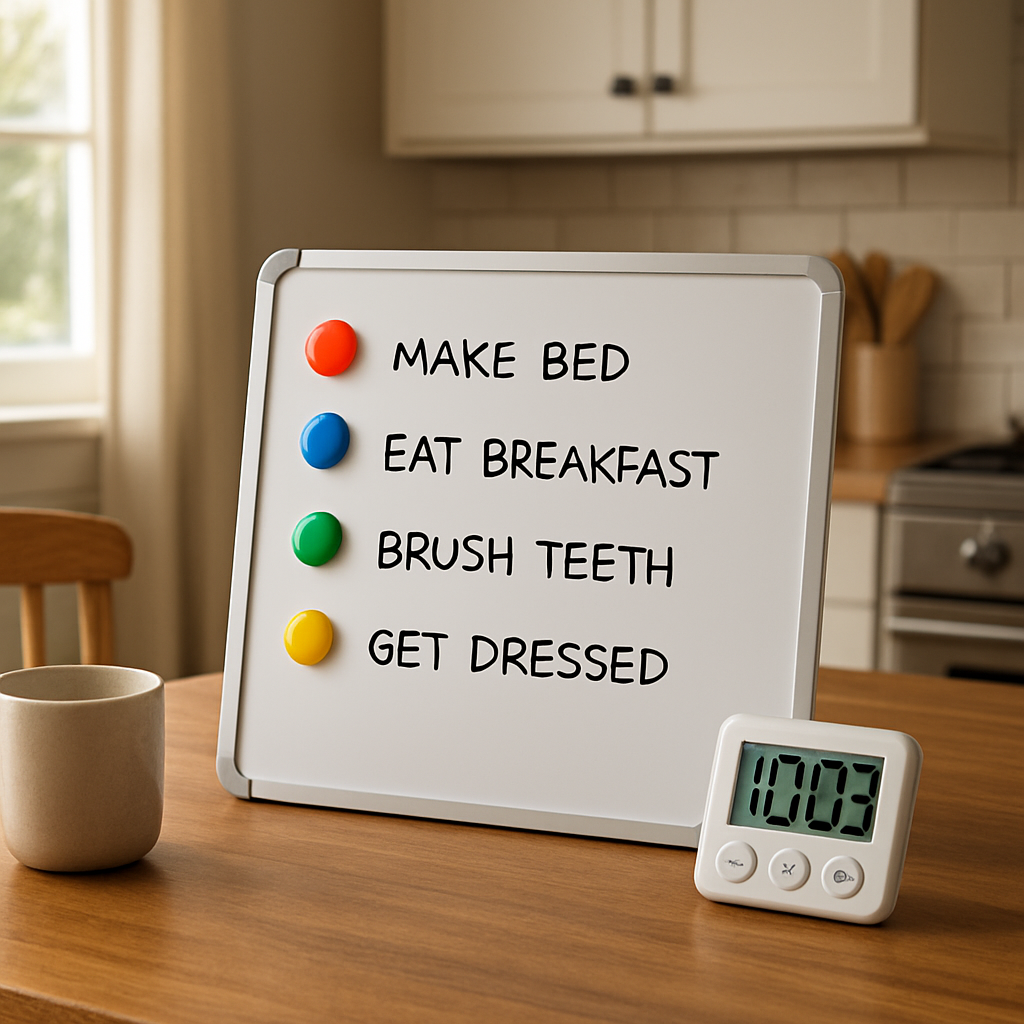
So, what should you do right now? Grab a marker, draw three columns, and set a 10‑minute timer for tonight’s dish‑wash sprint. Notice the shift, jot down a quick win, and celebrate it. Small, intentional tweaks add up to a partnership that runs smoothly—even when the ADHD brain is buzzing.
Step 5: Encourage Professional Help and Self‑Care
So far we’ve built visual cues, set up syncs, and tweaked routines. But there’s a piece that most couples overlook: the professional and self‑care safety net that keeps both partners from burning out.
Ever felt the weight of trying to fix everything on your own? You’re not alone. When the ADHD brain spikes into overload, even the most organized system can crumble. That’s why learning how to support a partner with adhd means also knowing when to call in extra help and how to refill your own cup.
Know the signs that professional support is needed
Stress isn’t just a mood; it’s a signal. If you notice any of these patterns, it might be time to seek a therapist, coach, or psychiatrist:
- Frequent meltdowns that linger for hours.
- Persistent anxiety, depression, or sleep issues for either partner.
- Executive‑function tasks (paying bills, planning meals) repeatedly falling through the cracks despite your best systems.
These red flags line up with research on neuro‑diverse couples, which emphasizes the benefit of early professional intervention (see tips for women in neuro‑diverse relationships).
Pick the right kind of professional
Not every therapist is a perfect fit for ADHD dynamics. Look for someone who mentions experience with adult ADHD, executive‑function coaching, or couples counseling that embraces neurodiversity.
Here’s a quick checklist you can run through during your first phone call:
- Do they ask about sensory needs and overload?
- Can they blend cognitive‑behavioral strategies with concrete, visual tools?
- Are they comfortable co‑creating “crisis scripts” with you both?
If the answer is yes, schedule a short intake session. Think of it as a “relationship health check” rather than a judgment.
Build a self‑care routine that feels doable
Self‑care isn’t a luxury; it’s a prerequisite for sustainable support. The trick is to make it feel like a habit, not a chore.
Start with three micro‑steps you can do in under five minutes:
- Take a “breath reset” – inhale for four counts, hold two, exhale four. Do it twice before you dive into a sync.
- Write a gratitude line for yourself on a sticky note and place it where you’ll see it during the day.
- Schedule a 15‑minute “solo recharge” block on your shared calendar – no phones, no tasks, just a favorite song or a quick stretch.
When you model this behavior, your partner learns that taking breaks is normal, not a sign of weakness.
Create a joint “support plan”
Grab a fresh index card and jot down four columns: Professional Help, Emergency Signals, Self‑Care for You, Self‑Care for Them. Fill each column together during a calm evening.
Example:
- Professional Help – “Therapist Dr. Lee, 30‑min Zoom, Tuesdays at 7 p.m.”
- Emergency Signals – “Red card on the fridge means I need a sensory break.”
- Self‑Care for You – “30‑minute walk after dinner on Mon/Wed.”
- Self‑Care for Them – “15‑minute fidget break after work on any day they feel overwhelmed.”
This visual “support plan” becomes a shared reference point, just like your chore board, but focused on wellbeing.
Make it a regular review
Every month, set aside ten minutes to ask two simple questions:
- Are our professional resources still meeting our needs?
- Is my self‑care routine still realistic?
If the answer is no, tweak the plan. Small adjustments prevent larger crises later.
Remember, encouraging professional help and self‑care isn’t a sign you’ve “failed”; it’s the smartest move in how to support a partner with adhd. By weaving expert guidance and personal recharge into your routine, you protect both the relationship and your own mental health.
Conclusion
We’ve walked through everything from visual cues to joint “support plans,” and you can see how each piece builds a safety net for both of you. When you keep the focus on practical habits instead of blame, the daily grind starts to feel less like a battlefield.
Remember: the magic happens when you turn insight into action. A quick 10‑minute sync, a colored magnet on the fridge, or a simple breath‑reset before a tough conversation can shift the whole dynamic. Those tiny wins add up, creating the confidence your partner with ADHD needs and the peace you deserve.
So, what’s the next step? Pick one of the tools we discussed—maybe the shared board or the monthly review—and try it tonight. Notice how it changes the conversation, then celebrate the progress, however small.
Supporting a partner with ADHD isn’t a one‑time project; it’s an ongoing partnership. Keep the rhythm, stay curious, and give yourselves permission to adjust as you learn.
If you’re ready for more guided help, our Happy Together community offers templates and coaching that fit right into the habits you’re already building.
Remember, every step forward, no matter how small, reinforces the trust that fuels a thriving relationship together.
FAQ
How can I set up a visual reminder system that actually sticks for both of us?
Start with one spot that you both pass every day—like the kitchen fridge or the bathroom mirror. Pick a simple tool: a magnetic board, colored sticky notes, or a whiteboard with three columns (Today, Tomorrow, This Week). Use a color code that means something to you (green for chores, blue for appointments). Spend five minutes together labeling the first week’s tasks, then celebrate each ticked box. The key is low effort and shared ownership, so the system feels like “our thing” instead of a chore you’re forced to do.
What’s a gentle way to do a daily check‑in without it sounding like a lecture?
Pick a consistent 10‑minute window—maybe right after dinner or before the TV starts. Begin with a “win” round: each of you shares one small success from the day, no matter how tiny. Then move to a “need” round, phrasing requests as personal feelings (“I feel calmer when the bills are on the board”). Set a timer so the chat stays brief, and close with one concrete action for tomorrow. The structure keeps it focused, while the win‑first habit builds positivity.
How should I react when my partner forgets an important task or appointment?
First, pause and label the behavior as a symptom of ADHD—not a character flaw. Acknowledge the impact on you (“I feel stressed when the bill slips”), then suggest a quick fix (“Let’s put a reminder on our shared calendar right now”). Offer to help set the reminder, but keep the tone collaborative. If the pattern repeats, revisit your visual board together and adjust the cue (maybe a louder alarm or a different color). The goal is to solve the problem, not assign blame.
What self‑care habits can I adopt so I don’t burn out while supporting my ADHD partner?
Start with micro‑breaks that fit into your day. A two‑minute breathing reset before you dive into a sync can lower cortisol. Write a one‑sentence gratitude note to yourself and stick it on the bathroom mirror—seeing it while brushing teeth reinforces a positive mindset. Schedule a “recharge” block twice a week (walk, short meditation, or a favorite podcast) and treat it like any other appointment. When you model regular self‑care, your partner learns that refilling the cup is essential for both of you.
When is it the right time to bring in a therapist or coach, and what should I look for?
If you notice recurring meltdowns, chronic anxiety, or that essential tasks keep falling through despite your board, it’s a sign to seek help. Look for a professional who lists experience with adult ADHD, couples counseling, or executive‑function coaching. During the first call, ask if they use concrete tools (visual schedules, cue scripts) alongside talk therapy. A good fit will collaborate with you both, offering strategies you can plug straight into the routines you’ve already built.
How can we keep romance alive while staying organized and focused on ADHD‑specific habits?
Schedule a “date‑only” slot that isn’t tied to any to‑do list—just a fun activity you both enjoy. Treat it like a mini‑celebration of the progress you’ve made on the board. During the date, keep phones away and use a simple cue (“look at each other for five seconds”) to stay present. Afterward, quickly jot down one thing that made you smile and add it to a “gratitude wall” you’ve created together. The habit of celebrating small wins fuels intimacy without adding more tasks.