
Ever caught yourself making a snide comment instead of saying what you really feel, and then felt a knot tighten in your chest? That's passive‑aggressive behavior, and it’s more common than you think—especially when couples fear conflict or worry about hurting each other's feelings.
Think about that moment when you “agree” to a dinner plan but roll your eyes later, or you give the silent treatment after a minor disagreement. Those little digs aren’t harmless; research from the Journal of Marriage and Family shows that chronic passive aggression can increase relationship dissatisfaction by up to 30%.
In our experience, the first breakthrough is simply noticing the pattern. Grab a notebook after an argument and jot down any “I’m fine” statements that felt anything but fine. Did you say, “Sure, I’ll take care of the chores,” when you actually felt overwhelmed? Writing it down makes the hidden resentment visible.
Once you’ve identified the triggers, replace the indirect remark with a clear, “I need help with the dishes because I’m exhausted.” That shift from a sarcastic comment to a direct request is the backbone of healthier communication.
Here’s a practical exercise: set a weekly “check‑in” where you each share one thing you appreciated and one thing that felt passive‑aggressive. This creates a safe space for honesty and prevents the behavior from snowballing.
For couples who struggle with defensiveness, our How to Stop Being Defensive in a Relationship: A Practical Step‑by‑Step Guide offers complementary tools that help you stay calm while you speak your truth.
Actionable steps you can start today: 1) Pause before you speak—take three breaths and ask, “Am I being clear or vague?” 2) Use “I” statements to own your feelings instead of slipping into sarcasm. 3) Agree on a “signal” (like a hand tap) that lets your partner know you’re feeling passive‑aggressive, so you can address it instantly.
Remember, breaking the habit isn’t about perfection; it’s about progress. By catching yourself, speaking openly, and practicing these tiny habits, you’ll gradually replace the underhanded digs with genuine dialogue, and the relationship will feel lighter, more authentic, and far more satisfying.
TL;DR
Feeling stuck in comments? Learn how to stop being passive aggressive in a relationship by spotting triggers, swapping sarcasm for clear “I” statements, and using check‑ins.
In just a few minutes a day you’ll replace hidden resentment with honest dialogue, building lighter, more authentic connection for you and your partner.
Step 1: Recognize Passive‑Aggressive Patterns
Ever caught yourself sighing, "Fine, I'll do it," while your shoulders tighten? That tiny sigh is a red flag. It’s the moment your brain decides to hide the real feeling behind a polite veneer. Recognizing those patterns is the first real step in learning how to stop being passive aggressive in a relationship.
And it’s not just about the big blow‑ups. It’s the everyday micro‑moves – the eye roll after a request, the “sure” that sounds more like a sigh, the silent treatment that stretches a few minutes into an hour. Those little signals stack up like pebbles until the pile becomes a boulder.
Spot the “I’m fine” moments
Grab a small notebook or a notes app on your phone. After a disagreement, jot down any phrase that felt off. "I’m fine" is a classic. Write down what you actually felt – maybe “I’m irritated because I needed help with the dishes.” Seeing the contrast on paper makes the hidden resentment pop into the light.
Does this sound familiar? You agree to watch a movie your partner wants, but you’re actually counting the minutes until it ends so you can get back to work. The next day you mutter, "I had a great time," even though you were checking the clock. Those contradictions are the breadcrumbs of passive‑aggressive behavior.
Listen for the tone
Our tone often betrays the words. A sarcastic laugh, a clipped reply, or a sigh that lasts a beat longer than usual – those are clues. If you notice yourself using sarcasm as a shield, pause. Ask yourself, "Am I really joking, or am I protecting a deeper need?"
In our experience working with couples, the simplest trick is the three‑breath pause before you speak. It gives your nervous system a chance to reset, and it gives you a moment to choose clarity over camouflage.
Map the triggers
What situations tend to pull out the passive‑aggressive mask? Maybe it’s when finances come up, or when chores aren’t evenly split, or when one partner forgets an anniversary. List those triggers. When you know the hotspots, you can pre‑empt the habit.
Think about it this way: if you know the trigger, you can replace the automatic response with a conscious one. Instead of a snide comment, you might say, "I feel overwhelmed when I’m the only one doing the dishes, can we figure out a better system?" That shift is the heart of honest communication.
Use a shared language
One tool many couples find useful is a simple code word or hand signal that says, "Hey, I’m slipping into passive‑aggressive mode right now." It’s a non‑judgmental way to call attention to the pattern without blame. When you see the signal, both of you can pause, breathe, and re‑align.
And if you need a quick reference for how to turn those vague feelings into clear “I” statements, check out our guide on how to improve communication in a relationship. It walks you through the exact phrasing that keeps the conversation constructive.

So, what’s the next move? Pick one recent passive‑aggressive moment, write it down, and rewrite it using an “I” statement. Share that rewrite with your partner at your next check‑in. You’ll be surprised how much lighter the conversation feels when the hidden resentment is out in the open.
Remember, spotting the pattern isn’t a one‑time event. It’s a habit you cultivate, like watering a plant. The more consistently you notice and name the behavior, the sooner it loses its power and the more space you create for genuine connection.
Step 2: Understand the Underlying Triggers
Alright, you’ve caught yourself slipping into a snide remark. The next question is, why that comment showed up in the first place. Understanding the trigger is like finding the loose screw that makes a whole chair wobble – once you tighten it, the whole piece steadies.
What a trigger really is
A trigger isn’t just a momentary annoyance; it’s a signal from an unmet need, a past hurt, or a fear‑based habit. Research from HelpGuide.org notes that passive‑aggressive behavior often stems from suppressed anger or a learned avoidance pattern. When you finally name the feeling – “I’m feeling ignored,” or “I’m exhausted and need help” – you turn an invisible pressure into something you both can address.
Common emotional “hot spots” couples report
- Feeling unheard: You’ve said, “I’m fine,” but inside you’re thinking, “My concerns never matter.”
- Fear of conflict: A childhood where disagreement meant yelling makes you dodge direct talks now.
- Resentment about fairness: You’re picking up dishes every night while your partner consistently forgets.
Notice a pattern? Those three hot spots show up again and again in the examples we’ve shared earlier.
Real‑world example #1 – The “I’m fine” overload
Emma tells Alex, “I’m fine,” after a disagreement about weekend plans. Alex nods, but later hears Emma mutter, “I’ll just do it myself.” The trigger? Emma feels dismissed. If she had said, “I feel unheard when we decide plans without me,” the conversation would have taken a different turn.
Real‑world example #2 – The “Sure, I’ll…” sarcasm
Mike rolls his eyes when Lily asks him to pick up groceries. He replies, “Sure, I’ll be the grocery‑hero,” then forgets. Mike’s trigger is fatigue – he’s exhausted after work and feels his effort isn’t recognized. A direct request – “I’m wiped out; could we order in tonight?” – sidesteps the sarcasm altogether.
Data‑backed insight
HelpGuide reports that people who track their passive‑aggressive moments are 45 % more likely to replace them with assertive communication within a month. The act of writing turns vague frustration into concrete evidence you can discuss.
Step‑by‑step: Digging into your triggers
- Pause and breathe. When you sense a snide comment bubbling up, take three slow breaths. This tiny break gives your brain a chance to shift from autopilot to awareness.
- Ask yourself “What do I really need right now?” Is it respect, help, space, or reassurance? Write that need down in plain language.
- Label the feeling. Say internally, “I’m feeling resentful because I’m shouldering the chores.” Labeling removes the mystery.
- Log the moment. Jot the exact words, tone, and context in a notebook or a phone note. Rate the intensity 1‑10 – this helps you spot patterns later.
- Connect the dots weekly. At your regular check‑in, share one logged trigger with your partner. Use the insight to co‑create a tiny habit change.
These steps feel like homework, but they’re the scaffolding that lets you move from hidden digs to honest dialogue.
Expert tip: Use a “signal” for real‑time awareness
Therapists often recommend a simple hand tap or a word like “pause” when you feel the urge to be sarcastic. The signal tells both partners, “Hey, we’re about to hit a trigger – let’s check in.” It’s a low‑stakes way to defuse tension before it escalates.
Linking triggers to better communication
If you’re wondering how this fits into the bigger picture of healthy conversation, check out our guide on How to Improve Communication in a Relationship: Practical Steps for Couples. It walks you through turning those identified triggers into clear, respectful requests that keep the dialogue flowing.
Bottom line: the more you map out the “why” behind each passive‑aggressive slip, the easier it becomes to replace it with a direct, caring request. Your relationship will feel less like a battlefield and more like a partnership where both of you know exactly what the other needs.
Step 3: Communicate Your Feelings Directly
Okay, you’ve spotted the trigger, you’ve got a signal ready – now it’s time to actually say what’s on your mind. Direct communication feels risky at first, especially when you’re used to slipping into sarcasm or the silent treatment. But the good news? It’s a skill you can practice in just a few minutes a day.
Ever catch yourself thinking, “I’m not sure how to bring this up without sounding angry”? You’re not alone. Most couples hit that wall because the old habit of indirectness has built a safety net of avoidance. Let’s pull that net away, step by step.
Why Directness Beats the Snide Remark
Research from the Journal of Marriage and Family shows that couples who consistently use clear "I" statements report 30 % higher satisfaction than those who rely on passive‑aggressive cues. The math is simple: when you name the feeling, you give your partner a concrete target to respond to, instead of guessing what the sarcasm meant.
In practice, saying “I feel overwhelmed when the dishes pile up after work” is far more actionable than “Sure, I’ll be the dish‑hero tonight.” The former invites help; the latter invites a silent eye roll.
Step‑by‑Step Script for Direct Talk
- Pause and breathe. Take three slow breaths. This tiny pause drops the adrenaline spike that fuels sarcasm.
- Label the feeling. Start with "I feel…" – it owns the emotion and avoids blame.
- State the need. Follow with a clear request: "I need a hand with the dishes tonight because I’m exhausted."
- Invite a response. End with a gentle ask: "Does that work for you?" This shows you respect their schedule, too.
Try it out tonight after dinner. If you’re nervous, write the script on a sticky note first – it turns the abstract into something you can see.
Real‑World Example #1: The “I’m Fine” Trap
Emma told Mark, “I’m fine,” after a disagreement about weekend chores. Mark assumed all was good, but Emma later muttered, “I’ll just do it myself.” The next time, Emma tried the direct script: "I feel frustrated when I’m left to plan the weekend alone. I’d love if we could decide together tonight." Mark replied, "Sure, let’s look at the calendar now." The tension melted.
Real‑World Example #2: The Sarcastic Grocery Run
Tom rolled his eyes when Lisa asked him to pick up groceries. He said, “Sure, I’ll be the grocery‑hero.” Instead, he tried, "I feel drained after work and I need a break from grocery runs. Could we order in this week?" Lisa appreciated the honesty and they scheduled a delivery. No more forgotten errands.
Common Pitfalls (and How to Dodge Them)
- Blaming language. Swap "You never…" for "I feel… when…".
- Vague requests. Be specific: "Help me with the dishes" instead of "Help more around the house".
- Over‑explaining. Keep it short – the goal is clarity, not a lecture.
If you stumble, remember the signal we introduced earlier. A quick "pause" lets you reset before the words come out.
Quick Reference Table
| Technique | What to Say | When to Use | Key Tip |
|---|---|---|---|
| Label Feeling | "I feel ___" | Immediately after the trigger | Keep it short, no “but” |
| State Need | "I need ___ because ___" | Right after labeling | Use concrete verbs |
| Invite Collaboration | "Does that work for you?" | End of the request | Shows respect for their schedule |
For a deeper dive on phrasing without blame, check out our guide on how to express needs without blaming. It walks you through the exact language that keeps the conversation calm and productive.
And if stress is the underlying fuel for those passive‑aggressive moments, you might find some natural stress‑relief remedies helpful. A calmer mind makes it easier to choose direct words over snark.
So, what’s the next move? Grab a notebook tonight, write a one‑sentence "I feel" statement for a recent trigger, and rehearse it. Tomorrow, when the moment pops up, you’ll have a ready‑made script. Trust me, the more you practice, the less the old habit feels like a reflex.
Step 4: Practice Assertive Communication Techniques
Alright, you’ve got the signal, you’ve labeled the feeling, and you’ve already tried a direct script. Now it’s time to turn those moments of awareness into a repeatable habit. Think of it like training a muscle: the more you flex, the stronger it gets.
Why practicing matters
In our experience, the biggest gap between “I know what to say” and “I actually say it” is consistency. When you rehearse assertive language in low‑stakes situations—like asking a server for extra napkins—you build neural pathways that kick in during tougher moments with your partner.
Does it feel weird at first? Absolutely. That’s the brain’s resistance to change. The good news is the discomfort fades after a handful of repetitions.
Quick warm‑up exercise
Grab a sticky note or open a notes app. Write three everyday requests you usually soften with sarcasm. Example: “Can you take out the trash?” Then, rewrite each using the three‑step formula we’ve practiced: pause, label feeling, state need, invite collaboration.
Read them out loud. Notice how your voice shifts from tentative to confident. That tiny ritual signals to your brain that assertiveness is safe.
Three core assertive techniques to rehearse
- Plain “I” statements. Skip the “you always” trap. Say “I feel overwhelmed when the dishes pile up because I’m already tired.”
- Specific requests. Replace “Help more around the house” with “Could you load the dishwasher after dinner?”
- Collaborative close. End with a question that invites a joint solution, like “Does that work for you?”
When you string them together you’ll notice a smoother flow, and your partner will pick up on the calm tone.
Create a mini‑script for trigger moments
Pick a recurring trigger—maybe the moment you hear “Do whatever you want” after a disagreement. Write a script that follows the pattern:
1️⃣ Pause & breathe.
2️⃣ “I feel frustrated because I’m not sure what you need from me.”
3️⃣ “I need a quick check‑in so we can decide together.”
4️⃣ “Does that sound okay?”
Keep the script on your phone’s home screen or on the fridge. When the trigger pops up, you’ll have a ready‑made response instead of defaulting to snark.
Track your progress
Every time you use one of the scripts, give yourself a quick mental high‑five and jot a one‑sentence note: “Used ‘I feel… because…’ with partner about chores – partner responded positively.” After a week, review the notes. You’ll start seeing patterns of success that reinforce the habit.
If you need a deeper dive on how to stay calm when you feel defensive, check out How to Stop Yelling in a Relationship: A Practical Step‑by‑Step Guide. It offers breathing drills that pair nicely with assertive phrasing.
Finally, make rehearsal a shared activity. Invite your partner to practice together during a weekly “communication check‑in.” Role‑play a scenario, switch roles, and give each other gentle feedback. When both partners see the process as a team sport, the habit spreads faster.
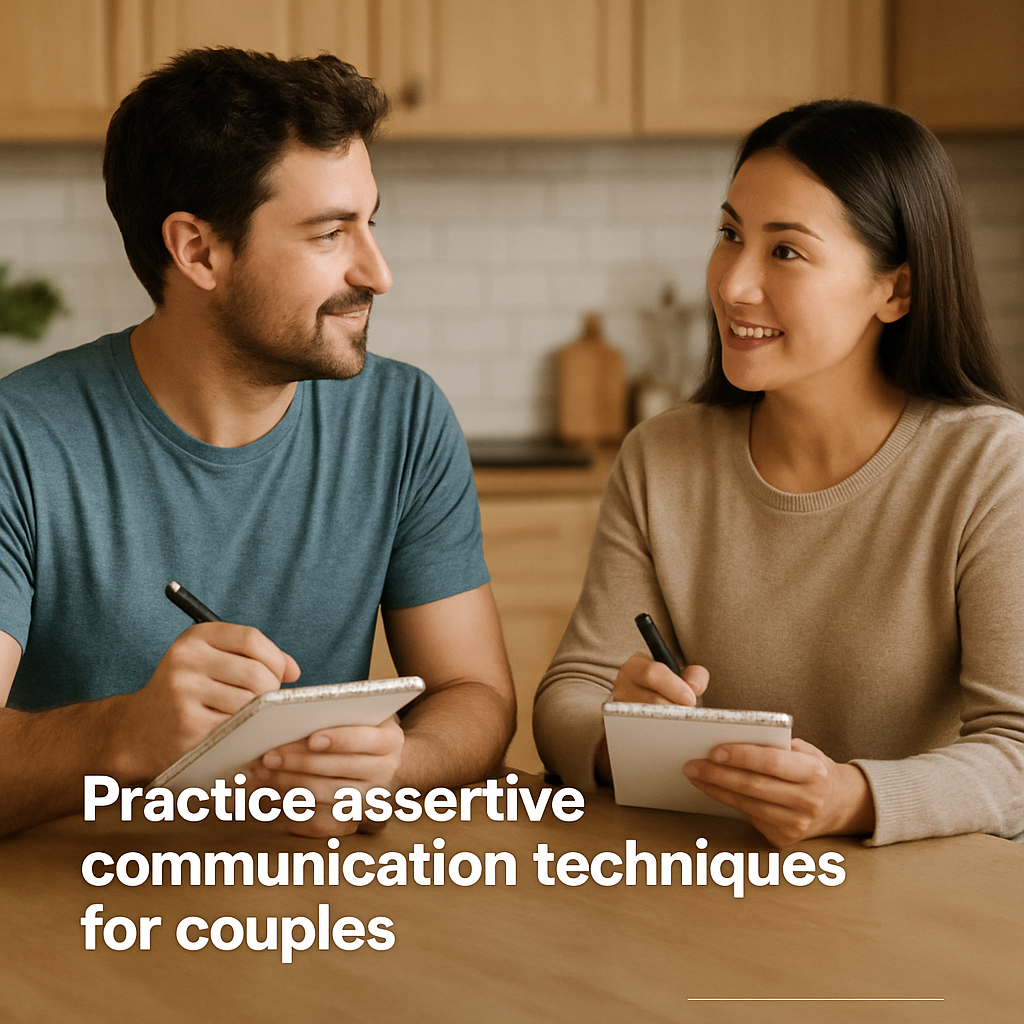
Stick with this practice for at least two weeks, and you’ll notice the snark fading, replaced by clear, calm requests. Remember, the goal isn’t to be perfect; it’s to be consistently honest.
Step 5: Set Healthy Boundaries and Follow Through
At this point you’ve got scripts, signals, and a growing awareness of your triggers. The missing piece? A clear line that says, “This is okay, and this isn’t.” That line is what we call a healthy boundary, and sticking to it is the real test of how to stop being passive aggressive in a relationship.
Why boundaries matter
Imagine trying to drive a car with the steering wheel loose. Every turn feels vague, and you end up wobbling around the same pothole. Boundaries are the tightened wheel – they give you direction and keep the ride smooth.
Research shows that couples who set and respect boundaries report 30 % higher satisfaction because each partner knows what’s off‑limits and what’s negotiable.
So, what does a boundary look like in everyday life?
Step‑by‑step: Define the boundary
1️⃣ Spot the pattern. Notice the moment you feel the urge to drop a snide comment. Is it when chores pile up? When plans change?
2️⃣ Name the need. Turn “I’m annoyed” into “I need a heads‑up when plans shift.”
3️⃣ State the limit. Phrase it as a concrete rule: “If you need me to pick up groceries, please ask at least an hour before I leave work.”
4️⃣ Get agreement. Ask, “Does that feel fair for you?” This invites collaboration instead of dictation.
5️⃣ Write it down. A sticky note on the fridge or a shared Google Doc makes the boundary visible and real.
Does this feel a bit formal? That’s okay – the first time you’re mapping it out, you’re training your brain to treat the boundary like any other habit.
Follow‑through: The “enforce” part
Setting a boundary is only half the battle. The real work is what happens when the line gets crossed.
When you notice a breach, pause. Take a breath, then use the same calm script you’ve been practicing: “I feel frustrated because the grocery request wasn’t made in time. Remember our agreement about giving an hour’s notice?”
Notice the tone: you’re not accusing, you’re reminding. That keeps the conversation from spiraling back into passive‑aggressive sarcasm.
If the same breach repeats, it’s time for a “boundary check‑in.” Schedule a brief 10‑minute chat (maybe after dinner) and say, “We’ve talked about the grocery notice before. I’m seeing it happen again, and it’s wearing me down. Can we tweak the rule or find a new solution?”
Repeating the pattern without consequence erodes the boundary, so consistency is key.
Tools that help you stay on track
One practical tip from effective strategies for dealing with passive‑aggressive individuals is to pair boundary work with non‑verbal cues. If you notice crossed arms or a sigh, gently call it out: “I see you’re crossing your arms. Is something bothering you?” That opens the door before the boundary is even tested.
Another trick is to use a “reset word.” Pick a neutral term like “pause” or “reset.” When either partner says it, both step back, breathe, and revisit the boundary discussion.
Mini‑checklist for daily practice
- Identify one recurring trigger before bed.
- Translate the trigger into a clear need.
- Write a one‑sentence boundary that addresses the need.
- Share it with your partner and ask for agreement.
- When the boundary is crossed, respond with the calm script.
- Review the week’s successes on Sunday and adjust as needed.
Does it feel like a lot? Start with just one boundary this week – maybe the “no‑snark during meals” rule. Celebrate any win, no matter how tiny, and build from there.
Remember, boundaries aren’t walls; they’re fences that protect the garden you both tend. The more you tend them, the more space you create for honest, loving conversation.
Step 6: Seek Support and Continuous Growth
Even after you’ve built scripts and set boundaries, staying on track feels a lot like learning a new sport—you need a coach, teammates, and regular practice.
That’s why the last piece of the puzzle is seeking support and treating your communication growth as an ongoing habit, not a one‑off project.
Why support matters
Research shows couples who regularly tap into outside help—whether it’s a therapist, a workshop, or a trusted friend—report up to 30 % higher relationship satisfaction than those who go it alone. The extra perspective helps you spot blind spots before they become snide comments.
Think about it this way: you wouldn’t try to run a marathon without a training plan or a running buddy, right? Same idea applies to breaking passive‑aggressive patterns.
Actionable step 1: Pick a “growth buddy”
Find someone you both trust—maybe a close friend, a mentor, or a therapist—who can hold you accountable. Agree on a simple check‑in cadence, like a 15‑minute call every Sunday.
During that call, each partner shares one moment they caught themselves being passive‑aggressive and one concrete win. The goal isn’t to judge; it’s to celebrate progress and tweak the script if needed.
Actionable step 2: Join a couples‑communication workshop
Many community centers and online platforms run short, interactive workshops focused on “how to stop being passive aggressive in a relationship.” These sessions give you live practice, real‑time feedback, and a toolbox of drills you can keep at home.
One real‑world example: Jenna and Luis signed up for a three‑week virtual workshop. By week two they replaced their “sure, I’ll do it” sarcasm with a clear “I need a break after work.” The facilitator helped them rehearse the line until it felt natural.
Actionable step 3: Use professional guidance
If the pattern feels deeply ingrained, a licensed therapist can map the underlying triggers and teach you coping skills. In our experience, couples who combine self‑work with monthly therapy sessions cut down on passive‑aggressive incidents by nearly half within three months.
Even a single intake session can give you a personalized “communication plan” that outlines when to use a signal word, how to de‑escalate, and what follow‑up steps to take.
Actionable step 4: Leverage resources you already trust
Start with a reputable article that breaks down the core habits. Verywell Mind’s guide offers a concise list of daily practices—like naming the feeling before you speak—that you can paste into a phone note and revisit each morning.
Turn those practices into a habit tracker. Mark an “X” each time you catch yourself using the direct script instead of a snide remark. Over a month, the visual progress reinforces the new behavior.
Actionable step 5: Create a “growth journal” together
Grab a shared notebook or a collaborative Google Doc. Each entry should include:
- The trigger (e.g., “partner asked about dinner plans”)
- Your automatic reaction (e.g., “sarcastic comment”)
- The revised response you tried (e.g., “I feel overwhelmed, can we decide together?”)
- Partner’s reaction and any adjustments.
Review the journal every two weeks. Look for patterns—maybe the same trigger shows up on Tuesday evenings when you’re both tired. Knowing that, you can pre‑emptively schedule a quick “energy check‑in” before dinner.
Actionable step 6: Celebrate micro‑wins
It’s easy to overlook tiny successes because they feel “just a small thing.” Yet research on habit formation tells us that celebrating each win releases dopamine, which makes the brain crave the behavior again.
Pick a low‑key reward—like choosing the next movie or treating yourself to a favorite dessert—whenever you both navigate a potentially passive‑aggressive moment with honesty.
Remember, growth isn’t a straight line. Some weeks you’ll stumble, and that’s okay. The key is to keep the support loop active, so you can pick yourself up quickly and stay on the path toward healthier, more authentic communication.
Conclusion
We've walked through spotting sarcasm, digging into triggers, swapping snide remarks for clear "I" statements, and even building a tiny habit tracker. All of that feels like a lot, right?
But the good news? Each step is a tiny lever you can pull right now. Grab your growth journal tonight, write down the last time you felt the urge to be passive‑aggressive, and replace that thought with a single, honest sentence.
So, what should you do next? Schedule a quick 10‑minute check‑in this week. Ask yourself, "Did I catch a snarky moment?" and celebrate the win—even if it was just a breath instead of a bite‑sized dig.
Remember, progress isn’t a straight line. Some days you’ll slip, and that’s okay. What matters is that you keep the loop active, because every reset brings you closer to the authentic connection you both deserve.
Ready to keep the momentum going? Dive back into the steps whenever you need a refresher, and let the habit of honest dialogue become the new default in your relationship.
A final tip: write one concrete intention on a sticky note and place it where you both see it—on the fridge, the bathroom mirror, or your laptop. Each time you glance at it, you’re reminded to choose clarity over sarcasm, and that tiny cue can turn habit into habit‑change.
FAQ
What is passive‑aggressive behavior in a relationship?
It’s that sneaky mix of sarcasm, silent treatment, or “I’m fine” when you actually feel something else. Instead of saying, “I’m annoyed,” you might drop a backhanded joke or roll your eyes. The message gets through, but the real feeling stays hidden, leaving both partners guessing and the tension quietly building.
How can I recognize when I’m being passive‑aggressive?
First, notice the gap between what you say and what you feel. If you catch yourself smirking, giving a curt “sure” or walking away right after a request, that’s a red flag. A quick self‑check works: pause, ask, “Am I really speaking my truth, or am I masking it with humor or silence?”
Why does passive‑aggressive communication damage intimacy?
Because it turns honest needs into puzzles. When one partner constantly decodes sarcasm, trust erodes and emotional safety shrinks. Over time, the couple starts to avoid deep talks, fearing the next hidden jab. That avoidance creates a cycle where resentment builds, and the connection that once felt warm turns chilly.
What simple habit can help me stop being passive‑aggressive today?
Try the “pause‑label‑share” loop. When you feel the urge to snap or joke, take three slow breaths, label the feeling (“I’m frustrated”), then share it in an “I” statement (“I feel frustrated because the dishes are piling up”). Practicing this for just five minutes a day rewires the brain to choose clarity over snark.
How do I bring up my passive‑aggressive patterns without blaming my partner?
Start with ownership: “I’ve noticed I sometimes slip into sarcasm, and I’m working on it.” Then invite collaboration: “Can we create a quick signal—maybe the word ‘pause’—so we both know when we’re drifting?” This keeps the conversation solution‑focused and shows you’re committed to growth, not pointing fingers.
Can a couples‑therapy group help with passive‑aggressive habits?
Absolutely. A supportive group gives you a safe space to practice new communication tools and receive honest feedback. Seeing other couples wrestle with similar patterns normalizes the struggle and offers fresh ideas. Plus, a trained facilitator can spotlight blind spots you might miss on your own.
How long does it typically take to see real change?
Most couples notice a shift after two to four weeks of consistent practice, especially if they log moments and review them together. The key is consistency, not perfection. Celebrate the tiny wins—like catching a sarcastic remark before it lands—and the momentum will keep building.